


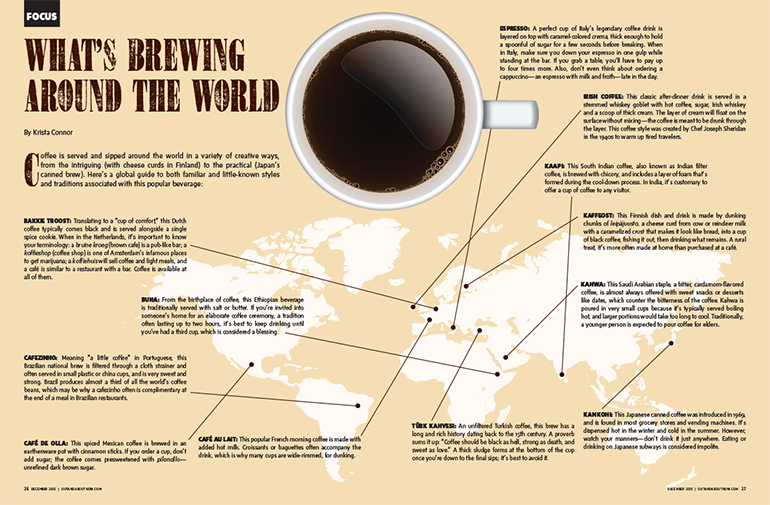
Coffee is served and sipped around the world in a variety of creative ways, from the intriguing (with cheese curds in Finland) to the practical (Japan’s canned brew). Here’s a global guide to both familiar and little-known styles and traditions associated with this popular beverage:
Bakkie troost: Translating to a “cup of comfort,” this Dutch coffee typically comes black and is served alongside a single spice cookie. When in the Netherlands, it’s important to know your terminology: a bruine kroeg (brown cafe) is a pub-like bar; a koffieshop (coffee shop) is one of Amsterdam’s infamous places to get marijuana; a koffiehuis will sell coffee and light meals, and a café is similar to a restaurant with a bar. Coffee is available at all of them.
Buna: From the birthplace of coffee, this Ethiopian beverage is traditionally served with salt or butter. If you’re invited into someone’s home for an elaborate coffee ceremony, a tradition often lasting up to two hours, it’s best to keep drinking until you’ve had a third cup, which is considered a blessing.
Cafezinho: Meaning “a little coffee” in Portuguese, this Brazilian national brew is filtered through a cloth strainer and often served in small plastic or china cups, and is very sweet and strong. Brazil produces almost a third of all the world’s coffee beans, which may be why a cafezinho often is complimentary at the end of a meal in Brazilian restaurants.
Café de olla: This spiced Mexican coffee is brewed in an earthenware pot with cinnamon sticks. If you order a cup, don’t add sugar; the coffee comes presweetened with piloncillo—unrefined dark brown sugar.



Café au lait: This popular French morning coffee is made with added hot milk. Croissants or baguettes often accompany the drink, which is why many cups are wide-rimmed, for dunking.
Espresso: A perfect cup of Italy’s legendary coffee drink is layered on top with caramel-colored crema, thick enough to hold a spoonful of sugar for a few seconds before breaking. When in Italy, make sure you down your espresso in one gulp while standing at the bar. If you grab a table, you’ll have to pay up to four times more. Also, don’t even think about ordering a cappuccino—an espresso with milk and froth—late in the day.
 CLICK HERE TO VIEW THE INFOGRAPHIC
Irish coffee: This classic after-dinner drink is served in a stemmed whiskey goblet with hot coffee, sugar, Irish whiskey and a scoop of thick cream. The layer of cream will float on the surface without mixing—the coffee is meant to be drunk through the layer. This coffee style was created by Chef Joseph Sheridan in the 1940s to warm up tired travelers.
Kaapi: This South Indian coffee, also known as Indian filter coffee, is brewed with chicory, and includes a layer of foam that’s formed during the cool-down process. In India, it’s customary to offer a cup of coffee to any visitor.
Kaffeost: This Finnish dish and drink is made by dunking chunks of leipäjuusto, a cheese curd from cow or reindeer milk with a caramelized crust that makes it look like bread, into a cup of black coffee, fishing it out, then drinking what remains. A rural treat, it’s more often made at home than purchased at a café.
Kahwa: This Saudi Arabian staple, a bitter, cardamom-flavored coffee, is almost always offered with sweet snacks or desserts like dates, which counter the bitterness of the coffee. Kahwa is poured in very small cups because it’s typically served boiling hot, and larger portions would take too long to cool. Traditionally, a younger person is expected to pour coffee for elders.
Kan Kohi: This Japanese canned coffee was introduced in 1969, and is found in most grocery stores and vending machines. It’s dispensed hot in the winter and cold in the summer. However, watch your manners—don’t drink it just anywhere. Eating or drinking on Japanese subways is considered impolite.
Türk kahvesi: An unfiltered Turkish coffee, this brew has a long and rich history dating back to the 15th century. A proverb sums it up: “Coffee should be black as hell, strong as death, and sweet as love.” A thick sludge forms at the bottom of the cup once you’re down to the final sips; it’s best to avoid it.