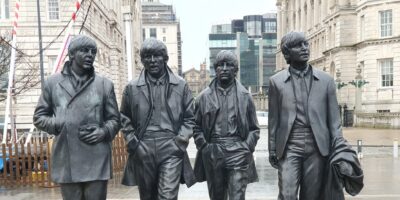

Above: The famed Beatles statue in Liverpool.
By Kevin Noonan
Irene O’Connor was living in post-war England, in the port city of Liverpool, and after six years of the most brutal and destructive war in history, and the painful reconstruction that followed, she and other teen-agers were ready to party.
One of the places they partied was a hole-in-the-wall called The Cavern Club, where local musicians played the latest music. And one of those bands was an unknown group of Liverpool lads who went by the strange name of The Beatles.
“We just loved them,” says O’Connor, who is now in her 80s. “But even though we loved who they were back then, we had no idea what they would become.”


What they became, of course, is the most influential band of all time. And O’Connor is one of the few people on earth who can say she knew them before they achieved fame and fortune.
O’Connor now lives in the village of Arden, where she’s resided since 1970. She loves her current life and has no desire to live in the past, but when people find out about her history with the Beatles, well, they just have to know more.
“I get that all of the time,” she says, “but the fact of the matter is that I had no idea what this little band in this little club would become. We would go to the Cavern, usually on Tuesday nights, and we loved to listen to the music — usually skiffle — and dance.”
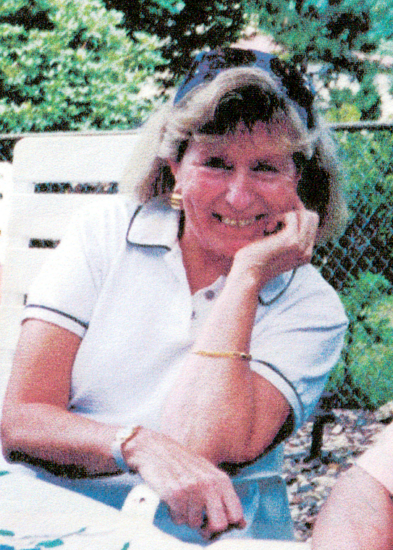
Irene O’Connor
She certainly got plenty of opportunities to see The Beatles there — from 1961-63 the group appeared at The Cavern Club 292 times.
“We loved their music, but there were a lot of good music groups around Liverpool at the time,” she says, “so even though they were as good as anybody, there was nothing to suggest how famous they would become.”
And when did O’Connor realize that The Beatles were famous? Pretty much the same time the rest of the world did.
“Tell the truth, it was The Ed Sullivan Show [in 1964], like a lot of people,” she says. “When Ed Sullivan said ‘Here come The Beatles…’ I thought, ‘Well, I’ll be buggered…’
“I had no idea.”
Of all the Beatles, her favorite back in the Cavern days was the drummer.
“For some reason, I focused a lot on Ringo,” she says. “He just always seemed to be having fun, so we had fun, also.”
But the Beatle she ended up having the closest connection with was John Lennon. She lived in New York when Lennon was staying at the now infamous Dakota, the apartment complex where he was murdered in 1980, and she would run into him at Central Park or on the sidewalk somewhere on the Upper West Side.
“I had the good fortune to meet up with John and just say hello,” she says. “It’s not like I saw him a lot or talked to him a lot, but when I did, he was always very, very friendly. It’s so sad to think about would happen to him later.”
O’Connor traveled the world with her ex-husband, an American she met in England and married in Dublin, Ireland. He served in the U.S. Air Force, which took the couple to Paris and then to several locations in America, including Texas, Michigan, Chicago and New York. He eventually took a job as a buyer for the John Wanamaker department store chain, which indirectly led Irene O’Connor to Delaware and, more specifically, Arden.
Paul Nolan is O’Connor’s neighbor — he and his wife, Stevie, front the band Stevie and the Bluescasters — and he was floored when he first heard of O’Connor’s connection with the early Beatles.
“It’s fascinating to hear her stories about life in Liverpool and her experiences with the music scene back then,” Nolan says. “I mean, how many people do you know who can say they saw The Beatles before they became The Beatles?”