
Above: ‘Tis the season for spring greens to spruce up area dishes.
By Pam George
Spring is characterized by multiple colors — the sunny yellow of a daffodil, the pale pink of a dogwood blossom and the vivid red of a tulip. But for chefs, spring means green: ramps, peas and asparagus. After a winter of root vegetables and hearty fare, these vegetables bring brightness to the seasonal plate.
Some items, including asparagus, are available year-round. But others have a brief window of peak freshness, and you may not find them in supermarkets. Here are some delicious examples that you might spot on seasonal restaurant menus.
Ramped Up
Ramps, also known as wild leeks, are a chef’s darling. “I’m ramps all day long,” says Robbie Jester of InJest Events, a catering and private chef company. In this region, the flat, broad leaves generally emerge from late March or early April into May, depending on the weather.





Ramp enthusiasts tend to keep their foraging locations secret. “My sous chefs have a designated spot they visit every April,” says Michael Majewski, managing partner of Brandywine Prime Seafood & Chops at Chadds Ford Inn.
Chef Dan Sheridan is equally clandestine. Why the secrecy? The woodland plants are slow-growing and thrive only in the right shade, soil, and moisture conditions. As a result, they’re difficult to cultivate commercially. Careful foragers often cut the leaves above the bulb, allowing the plant to continue growing.
The entire ramp plant — both the white and green sections — is edible. Jester prepares a ramp-and-goat-cheese tart. He also sautés morels with ramps, adds crème fraîche and sea salt, and serves it on sourdough.
“I first tried it in product knowledge class at the Culinary Institute of America, and it is still a favorite 20 years later,” he says.
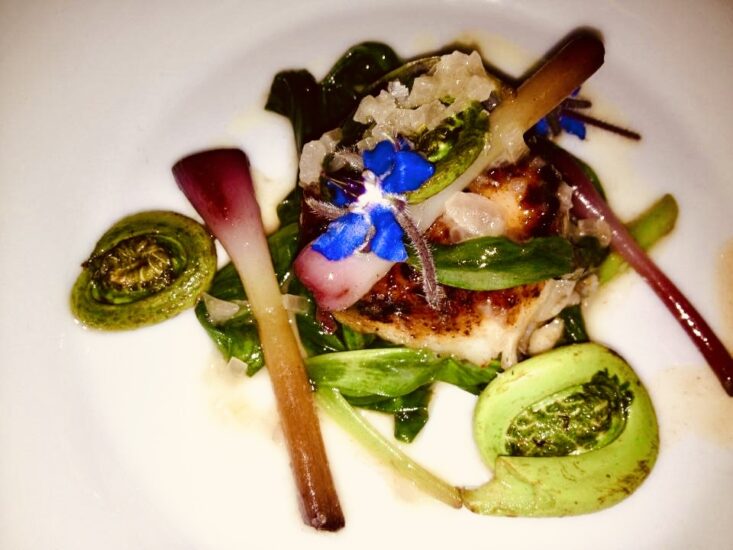
Picked ramps and fiddlehead ferns enhance this seafood dish.
Antimo DiMeo of Bardea Restaurant Group uses ramps to make pesto. “It’s extremely versatile and works beautifully with both land and sea, whether that’s mussels or lamb,” he says. At The Post in Wilmington’s Forty Acres, Sheridan adds the flat green leaves to omelets and quiches. At home, he cooks them down and stirs them into mashed potatoes to accompany grilled steak.
“We also pickle the tougher stems right above the bulbs for use all year, and we have a spicy ramp crisp that lasts a long time and adds some punch to dishes,” Sheridan says. “Most recently, I sent them out below a seared scallop tossed with pears, lime zest, and smoked walnut butter.”
Personal chef Andrew Cini marinates ramps in a Mediterranean-style salsa verde — think capers, anchovies, parsley, and lemon — and grills them over charcoal. He adds additional lemon and salsa to the finished product and serves it with grilled bread.
Fiddle DeeDee
As with ramps, fiddleheads are found in shady, moist, wooded areas and are typically foraged by those who know where to look. The coiled shoots of the ostrich fern taste like a cross between asparagus, broccoli and green beans. Fiddleheads also add texture to a dish.
If you see them in a restaurant, the prized shoots are often scattered atop a dish, such as a salad or pasta. Not only can fiddleheads be hard to procure, but they also require careful handling. Food-safety authorities advise that they should never be eaten raw or undercooked; they should be thoroughly boiled or steamed before further cooking.
A Whole Lotta Beans
Peas may be available year-round, but for generations, they have signaled spring. However, all peas in a pod aren’t all the same. Snow peas grow in flat, tender pods that are eaten whole. English peas, conversely, have firm, rounded pods, and the peas must be shelled before cooking. The work is worth it. “You can taste the sweetness,” says Steve Taplin, executive chef at Bar Reverie.
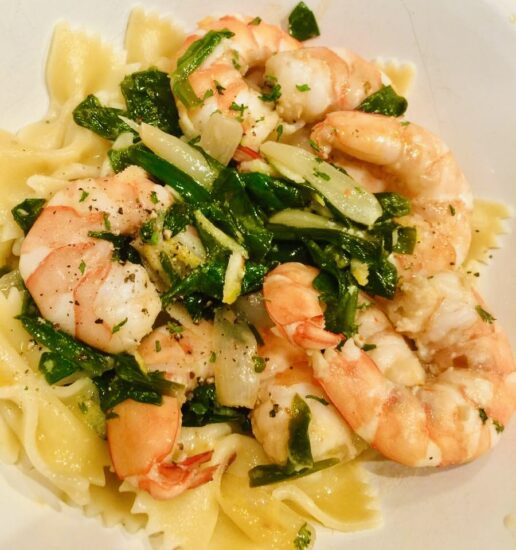
A shrimp dish enhanced with ramps that was created by the author.
At Tonic Seafood & Steak, the spring menu will feature rainbow trout with snow peas, English peas and lima beans, says executive chef Patrick Bradley. (Lima beans are generally harvested in summer and early fall.)
The pea plant also produces pea shoots, the tender young leaves and tendrils that chefs use in salads, sautés and as garnishes. At Pizza by Elizabeths, chefs will use pea shoots as a garnish starting in April.
Fava beans, also called broad beans, are large green legumes popular in Mediterranean and Middle Eastern cuisines. They grow in long pods and are typically harvested from spring into early summer, depending on climate and planting time. You can eat them fresh, steamed or dried.
However, preparing the fava beans is a labor-intensive process. They must be shelled twice: first from the pod and then from their individual skins. Taplin adds fava beans to pasta and incorporates them into ragu.
The Prime Time for Asparagus
Like peas, asparagus is available year-round. However, it is best during its natural season, which is spring. The spears are especially tender and sweet. Even so, chefs often peel the thick ends of the stalks, and Taplin has “collared” the spears, which involves tidying the area below the tip for a refined presentation. For spring, he serves a veal chop with crab and jumbo asparagus.

A dish featuring ramps marinated in a Mediterranean-style salsa verde created by chef Andrew Cini.
Green asparagus is most common, but white and purple varieties also exist. White asparagus is the same plant as green asparagus, but it is grown under soil or cover so sunlight cannot reach it. Without sun exposure, it doesn’t develop chlorophyll. The result is a milder, more delicate spear that is usually thicker and often requires more peeling. White asparagus is more expensive than its purple sibling, so Bradley saves it for specials.
Meanwhile, purple asparagus has a deep violet exterior and tends to be a bit sweeter, with higher natural sugar levels and a lower fiber content. The purple color fades when cooked.
A New Leaf
Spring greens are primarily cool-weather crops, meaning they grow best in mild conditions. That’s especially true of leafy vegetables, from lettuce to spinach to Swiss chard.
DiMeo favors mustard greens, radicchio, frisée, broccoli rabe and escarole. “They bring that fresh, bright, slightly bitter pop that really makes a dish feel alive this time of year,” he says. “We’ll use them raw, lightly dressed, folded into pastas or paired with fish and vegetables, depending on the dish.”
Some are only mildly bitter, depending on age and season. Baby arugula, for instance, is peppery but less bitter than mature leaves. Radicchio is generally more assertive than escarole.
Whether the greens are folded into pasta, spooned over fish, tucked into omelets or served simply with olive oil and lemon, spring greens deliver the same message: Winter is over.