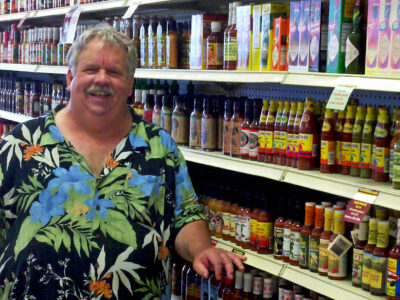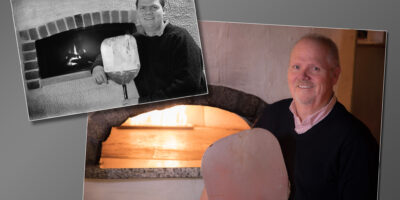

Above: Linda Gould started her business two years ago to help families avoid what she experienced upon the death of her father. Photo courtesy Linda Gould.
By Adriana Camacho-Church
Linda Gould plans to have a good death.
A volunteer at AccentCare Inpatient Hospice Center at Christiana Care Hospital and a death doula, the 65-year-old knows a thing or two about death and dying.
As a certified and trained death doula, Gould provides non-medical, practical, and emotional end-of-life planning for individuals and their families. Through her practice, The Good Death Doula, she offers free workshops to educate the public on topics such as medical aid in dying, home funerals, and eco-friendly burials. Her free classes — Death Chat with Cookies, Share Your Grief, and Artful Meditation — address comfort and healing.

Her podcast Talk Death Delaware features conversations on topics such as human composting — natural organic reduction (NOR), caregiver support, and hospice care.
“When thinking about my own death, I can’t forget the things I’ve seen,” says Gould, who resides in Newark. “Everyone wants to die peacefully in their sleep. That really doesn’t happen to many people. So, people should really think about what a good death would look like for them.”
A good death means planning your end-of-life — preparing your finances, funeral and burial arrangements ahead of time; notifying your loved ones of your end-of-life wishes; a plan that honor your life and values.
A 2017 study published in Health Affairs, an online journal, shows that two out of three Americans have not put their end-of-life wishes in writing.
Gould created The Good Death Doula two years ago to help others avoid the turmoil she and her family went through during her father’s last days. The sleep deprivation, the emotional roller coaster, the denial, the confusion about what to do, and the feeling of everything being out of our control took a toll on everyone involved, she says.
“We didn’t even know if he was dead when he died.”
A survey released in 2024 by the National Funeral Directors Association found that an overwhelming majority of Americans (91%) think it’s healthy and normal to discuss death and dying — but nearly a third (27%) are uncomfortable doing that, and 31% struggle to contemplate their own mortality. Findings also showed that one’s comfort level increases with age, with most Boomers open to discussing matters of death while most Gen Z are reluctant.
A native Delawarean who has lived in Europe, Australia, Africa and Japan, Gould says most Americans are unprepared for death. “Yet, that is so unnecessary,” she says. “There is a stigma around talking about death. I just want to help people get past that stigma so that something as natural and inevitable as death doesn’t have to be full of negativity, fear, and anxiety for the patient and the family.”
Wilmington resident Mary Jane Arden, 69, says Gould has helped her think through important decisions.
“Over the years I’ve come to realize that my horses and dogs were given a kinder, more compassionate end of life than my parents had,” Arden says. “That’s stayed with me, and it’s a big part of why I support medical aid in dying. For myself, I’d like to be cremated, with my ashes mixed with those of my dogs and scattered somewhere meaningful, returned to the world rather than buried. If my husband outlives me, then I’d want our ashes to be combined with his as well and dispersed together.”
Chris Lorence, 57, of Bethany Beach says he prefers to be composted and turned to soil.
“Whether embalmed and buried in a sealed vault or cremated, your remains are toxic and do more harm to the environment than most people realize,” Lorence says. “Linda was the first person I’d met who was aware of and an advocate for natural organic reduction. I joined her on her podcast to discuss organic burial and the need to expand awareness.”
Although Delaware legalized human composting in May of 2024, no facility offers it. “The state does not have any guidelines established,” says Robert Timblin, owner of Faries Funeral Directors in Smyrna. The industry is new, requiring time to establish regulations, infrastructure, and specialized facilities.
Delaware residents must currently use out-of-state options for NOR. Faries Funeral Directors partners with provider Recompose in Seattle to assist Delaware residents. Return Home and Earth Funeral are other providers. Costs for human composting typically range from $4,000 to $7,000, depending on the provider, services included, and location.
In May of 2025, medical aid in dying became legal in Delaware. It authorizes the option of medical aid in dying for terminally ill, mentally capable Delawareans.
When reflecting on her life, Gould says her interest in art, philosophy, yoga, exposure to other cultures and religions, and volunteering with AccentCare and sitting with patients at the end of their lives, have all led her to where she is now.
“The hardest part of being involved in this is that everywhere I go, I end up talking about death and dying, I’m worried no one will invite me to parties anymore.”
— For more information, visit Good-DeathDoula.com