

By Brianna Hansen
Trust is a funny thing. When we have it, we don’t stop to think about how much of our emotional well-being and comfort rests on it. But when it breaks, or when life changes so abruptly that we feel a total loss of control, we feel it everywhere — animals do, too.
At Humane Animal Partners, we meet dogs and cats whose worlds have been turned upside down. Some have experienced neglect or abuse. Some were lost and never reunited with their families. Others came from deeply loving homes but lost an owner who could no longer care for them. No matter the circumstances, they arrive in an unfamiliar place filled with new sounds, smells, faces, and routines. They cannot understand why their old life vanished or what will happen next.
Fear does not always look the same. It may look like hiding in the back of a kennel, refusing food, barking at everyone who passes, pacing endlessly, or pulling away from a gentle hand. Sometimes it looks like anger and aggression. Sometimes it looks like emptiness. Humans are no different.
I recently went through a season when parts of my personal and home life suddenly felt uncertain. I’ll spare you the Dear Abby details, but I can say this: when the foundation beneath you fractures, your nervous system goes into overdrive and normal function feels like a feat. It becomes difficult to think clearly, rest, or even believe everything will be okay. You search for danger in ordinary moments. You may become quieter or withdrawn, more reactive, more watchful — or all of the above.




This experience only deepened the empathy I have for the animals in our care. Behavior is communication, especially when words are not available. The dog trembling in the corner isn’t “difficult.” The cat who swats may not be “mean.” They may be asking the same questions we do when life changes without our permission: Am I safe? Can I trust you? What’s next?
Healing rarely comes from one grand gesture. Trust is rebuilt through small, repeated acts of care: meals arriving on time, a calm voice, a predictable routine, space when it is needed, affection when it is welcomed, and people who keep showing up — even when progress is slow and hard to see.
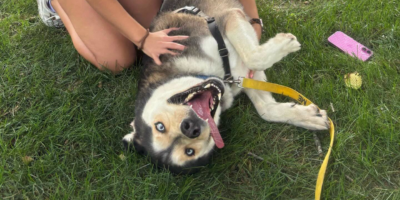
Love matters, but love paired with patience, empathy, kindness, and consistency is what begins to create security. Slowly, the body learns it does not have to remain on high alert. A tail lifts; an appetite returns; a hand is trusted. Hope begins to fill space fear once occupied.
We may not share the same language, but it seems healing sounds remarkably similar: You are safe. You are loved. I am still here.
– Look for the this month’s Humane Animal Partners (HAP) sponsored by Tito’s Handmade Vodka featured adoptable pets in the print version of this month’s issue, linked here.