
By Adriana Camacho-Church
This is one of two billboards in New Castle County proudly advertising 50 years of saving lives and making a difference in the safety and health of thousands of Delaware residents.
ContactLifeline is a non-profit, state-wide hotline organization that provides crisis services to the public and to victims and survivors of sexual assault.
A 24/7 free service, ContactLifeline staff members answer phone calls from those suffering from crises such as suicidal ideation, depression, mental illness, rape and sexual assault — and anyone in need of information and referral services.
The agency defines a crisis as any moment that is overwhelming for the individual who is calling. This includes individuals who need extra support to get through the day such as the elderly, those living with a developmental delay, or those feeling lonely.



Dr. Jackie Burgos-Cousin, ContactLifeline’s executive director, is proud to be part of a group celebrating 50 years of dedication to helping those in need. The organization is based on the belief that every person has the right to live free from fear, harm, and hopelessness.
“The best thing that I like about being executive director is supporting those who support those in need,” says Burgos-Cousin, now in her ninth year as executive director. “Our therapists, advocates and volunteers also need support, so I like to be that support for them.”
Board member Maria Angela Foust, who began as a volunteer at ContactLifeline 13 years ago, says that without the commitment of ContactLifeline’s professional staff and volunteers, the organization wouldn’t have lasted this long.
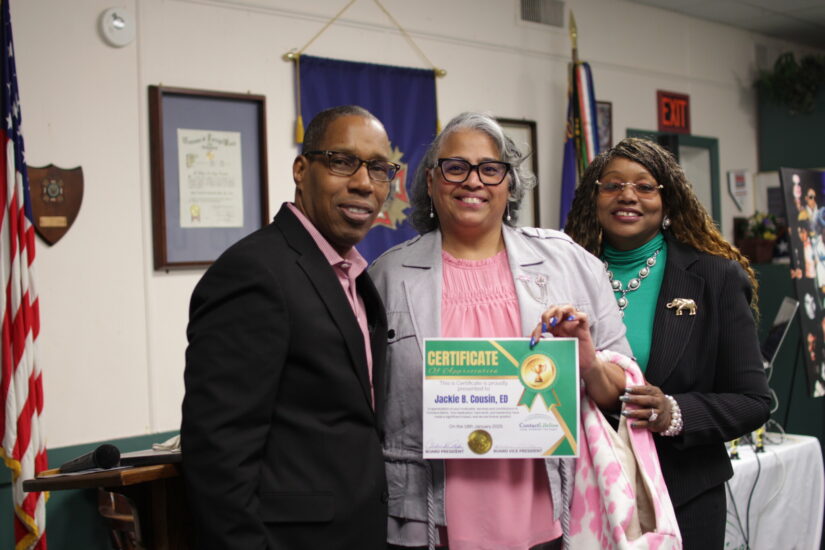
ContactLife executives (l-r) Darrall Mosley, Jacqueline Burgos-Cousin and Christina Taylor. Photo by DG Williams.
“For a society that cares about its citizens, the ability to identify and provide support to those struggling is key,” says Foust.
Balancing the needs of those seeking help and those who provide it is also key in running a crisis agency.
“When at 2 a. m. a hospital is in need of a ContactLifeline sexual assault advocate, the advocate goes there to assist and support the victim, says Burgos-Cousin. And when that advocate or another ContactLifeline staff member or volunteer needs a hand, they know they can rely on backup and support.
“In the middle of the night we know we can call a support worker if we need extra help,” says Wendy, a ContactLifeline volunteer for 40 years. “I have never felt alone there. Jackie, (ContactLifeline’s executive director) also takes shifts (calls), she is one of us, she knows what it’s like.”
Last year, ContactLifeline received 18,363 calls, 4,000 more calls than in 2023.
“Calls can go up or down throughout the years depending on what’s happening at that time and moment of the year,” says Burgos-Cousin. “We average about 1,000 calls a month.”
Calls are answered by professionally trained and supervised volunteers and professionals. Responders are taught listening skills and to respond anonymously and confidentially. The agency currently has 16 volunteers, from those who started a few months ago to three who have served more than 39 years. Volunteers also have the option of promoting awareness and sharing information about the agency at community events instead of answering calls. The volunteer training program is free of charge.
Wendy, who volunteers two or three times a month, says 40 years ago when she was going through struggles, her therapist recommended ContactLifeline. “It’s a good fit,” she says. “I’m not sure if this is the right word, but the biggest thing I feel and got from being there, is that it made me feel less broken, much less alone. It’s huge when I bring a person from a really bad emotional place to a good emotional place. Most people need a nonjudgemental person to speak with them for a few moments, and if I am that person, it is very satisfying.”
In 1974, ContactLifeline started off as Contact Wilmington. The crisis hotline was created for sexual assault related calls for residents in Wilmington and New Castle County areas. But when it became incorporated in 1982, the agency began to take all types of calls statewide.
In 2006 Contact Wilmington was renamed ContactLifeline when it was accredited to accept the National Suicide Prevention Line (NSPL). The NSPL is now the new three-digit 988 Suicide and Crisis Lifeline.
Today, the agency has offices in Kent and Sussex counties and offers a Crisis Chat service — online communication instead of speaking by phone. Counseling for sexual assault victims is also now available in Spanish. Services also include helping to train organizations such as hospital staff and law enforcement groups on sexual assault and on the services provided to victims.
ContactLifeline sexual assault therapists provide therapy to any person over the age of 12. They also offer a support group and family and couple therapy. All services are free; insurances are not billed. The agency receives funding from federal, state and local agencies including from different foundations and private donations.
“We receive around $600,000 yearly,” says Burgos-Cousin. “The funds help with maintaining staffing and support the operational cost of the agency.”
— Visit ContactLifeline.org or call (800) 262-9800 (Crisis Line)