

By Bob Yearick
Where are the Editors?
• Headline from The New York Times, courtesy of reader Cathy Marchand: “Inside the cryptic final months of Pep Guardiola’s tenor at Manchester City.” The story was about Guardiola’s tenure — length of service — as manager of the soccer team. Tenor refers to mood or tone.
• Chyron (horizontal text that scrolls across the TV screen) on Channel 10 Philadelphia, referring to Phillie Bryce Harper’s dental hygiene routine: “Harper’s brushing regiment.” A regiment is a body of soldiers commanded by a colonel and consisting of a variable number of companies, troops, or batteries. A regimen — the word needed here — is a systematic plan or course of action.
• Award-winning Wilmington journalist Larry Nagengast submitted an item from the Nebraska Examiner, prefacing it with this: “Rarely does a hard news story have such an incredibly humorous sequencing of two sentences.” The item: “Burbank paid the filing fee for Mike Marvin, the late entrant into the Legal Marijuana Now Party’s primary. Both deny he is a plant.”




• Mitchell Northam, USA TODAY: “After finishing fourth in MVP voting as a rookie, injuries plagued Clark last season and limited her to 13 games.” Injuries didn’t get votes in WNBA MVP voting; Caitlin Clark did.
• From People, in a piece about Michelle Obama’s book tour: “Equally as striking was her candor . . .” As in this phrase is redundant.
• The New Yorker’s Adam Gopnik wrote that Thomas Willing, Revolutionary War financier elected mayor of Philadelphia in 1763, “took pains to insure that he and his family intermarried with the stalwarts of his class.” Insure relates to insurance or financial matters, while ensure has the broader meaning of “making certain or safe” — the meaning here. I have seen this contrarian usage more than once in The New Yorker, which is one of the world’s most carefully edited publications, so I assume the editors have decided to adopt this as their style.
Department of Redundancies Dept.
• Lorenzo Reyes, in USA TODAY: “[LeBron] James has not revealed his future plans, but he will turn 42 in December and has been more vulnerable recently about how basketball is affecting his body.” As opposed to his past plans?
More on the ‘Rule’ that Isn’t
• April’s column discussed the mistaken taboo about prepositions at the end of sentences, and pointed out that such usage is often acceptable. Perhaps the most extreme example of how pedantic language can sound in attempting to comply with this non-rule is this sentence about a small girl who doesn’t want her bedtime story to be from a book about Australia: “What did you bring that book I didn’t want to be read out to from, about Down Under, up for?” While it reads like an error, the sentence is completely grammatical.
Answers to “What’s wrong with this picture?”
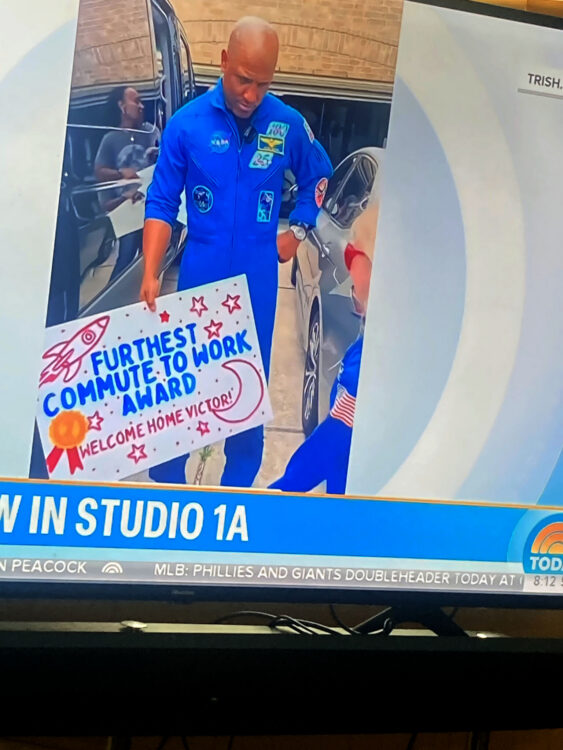
No. 1: Victor Glover, one of the astronauts on NASA’s Artemis II mission in April, holds a sign from a fan that labels the mission the “Furthest commute to work.” Unfortunately, that should be farthest commute. Further refers to figurative distance or abstract concepts, while farther is reserved for actual physical distances.
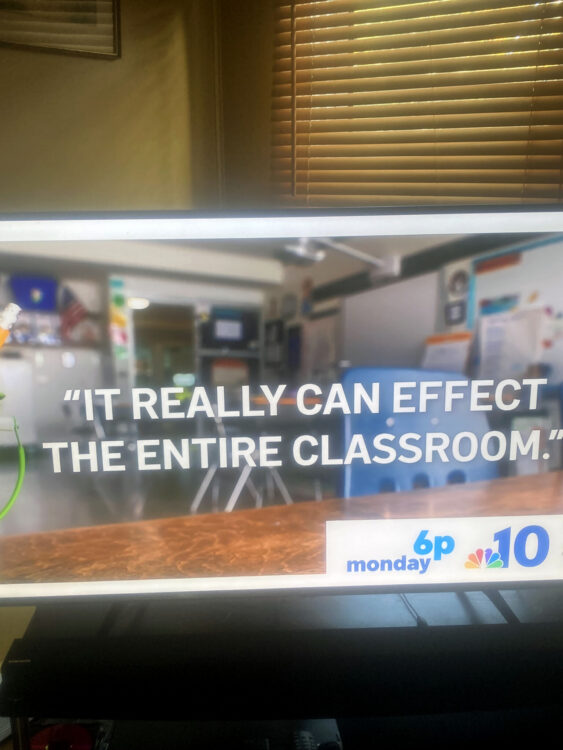
No. 2: Channel 10 Philadelphia strikes again with this call-out quote that uses effect (usually a noun) where affect (almost always a verb) should be.
Word of the Month
susurrus
Pronounced su-ser-as, it’s a noun meaning a whispering or rustling sound.
E.g., “Literature, in his view, was a susurrus of stifled screams, a missive from the netherworld of the collective imaginary.” — Becca Rothfeld,
The New Yorker
 Buy The War on Words book at the Hockessin BookShelf, at Huxley & Hiro Booksellers, or on Amazon. Or email me at ryearick@comcast.net.
Need a Speaker for your Organization?
Contact me for a fun presentation on grammar: ryearick@comcast.net.