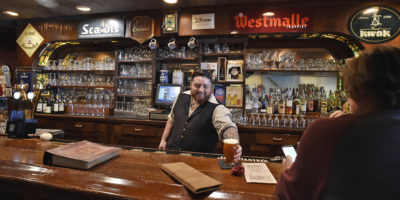

Above: These are “very concerning times” for the restaurant industry, says Javier Acuna, shown here at Santa Fe in Wilmington.
By Pam George
Photos by Justin Heyes
Javier Acuna could write a business book or make a TED Talks video. He’s certainly qualified. The founder of Hakuna Hospitality Group owns and operates Savora Catering & Events, Mi Ranchito Mexican Store, two Santa Fe Mexican Grill restaurants, and three Del Pez Mexican Gastropub locations, including the newest in The Grove in Newark.
A native of Colombia, the soft-spoken Acuna is continually learning how to be a better leader and better serve his employees and guests. The hard work has paid off. The Delaware Restaurant Association named Acuna the Restaurateur of the Year in 2014, and he is now the board chair of the Delaware Restaurant Foundation, the philanthropic and training arm of the Delaware Restaurant Association.
Running even one restaurant is not easy. “We are in very concerning times,” Acuna says. Ongoing labor shortages and increasing food prices are impacting the industry. While acknowledging the problems, Acuna is focused on solutions.


An Industry Example
Restaurants are one of the last bastions for people who want to get ahead, with or without degrees, the Delaware Restaurant Association maintains. That was true for Acuna, who grew up in Bogota, Colombia. His father was an economist, and his mother was an administrative assistant. The couple had three children, and after high school, Acuna’s sister moved to Delaware, where their uncle lived. She invited her brother to join her.
In the First State, Acuna studied industrial engineering and English as a second language at Delaware Technical Community College. He earned his bachelor’s in business from Wesley College. To pay tuition, the young student worked in a Mexican restaurant, washing dishes, cooking, expediting, and waiting tables. All the while, he saved his money, and when he learned that Picnic Mexitacos was for sale, he used his savings to purchase the tiny restaurant, which primarily appealed to Mexican immigrants.
Santa Fe opened in the Mexitacos space in 2003, and Acuna focused on recipes from Oaxaca and Mexico City, many of which appealed to non-Mexican diners. He opened a location in Wilmington in 2010, which was later razed to make room for the new 2000 Pennsylvania Avenue building. It would be six years before the Wilmington Santa Fe reopened in the new structure.
A Twist on the Traditional
Meanwhile, Hakuna Hospitality opened the 76-seat Del Pez Sea Mex in Newark in 2014. The initial concept focused on seafood. However, in 2016, Acuna had the chance to open a Wilmington Riverfront site. Gastropubs were redefining tavern, bistro and pub fare. Why not take the same liberties with Mexican cuisine?
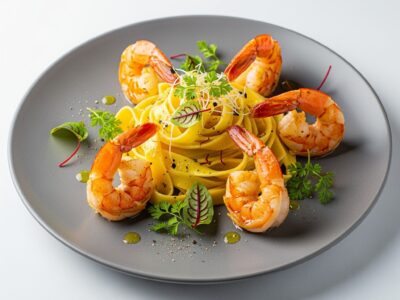
The Newark site closed so Hakuna could delve into the new concept, which today includes a host of creative twists. The burger is made with beef and chorizo served with chipotle mayonnaise. Slow-cooked short rib in a Coca-Cola reduction fills the chimichanga, and tacos are packed with Texas barbecue. Raw bar options include aguachile and sushi. The dishes and the atmosphere are cheerful and colorful. Expect squiggles of sauce, purple-red raw onions, pink pickled onions and fresh herb garnishes.
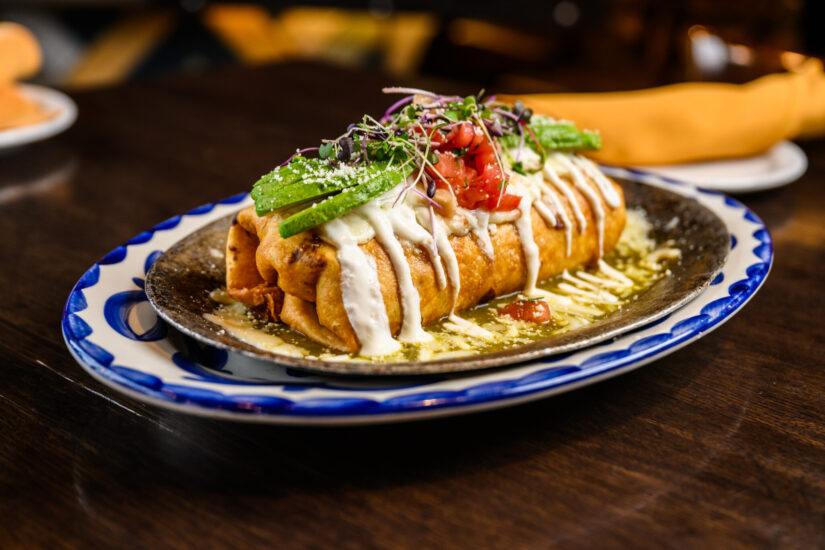
Hakuna’s signature short rib burrito.
It would be 10 years before Acuna opened another Del Pez, which isn’t surprising given the reopening of Santa Fe in Wilmington and COVID-19. But his site choice was unexpected. The 6,500-square-foot restaurant is in a former Bertucci’s in Concordville Town Centre, a Glen Mills shopping center with a Target, Home Depot and Staples. It’s near Maris Grove, the expansive retirement community, and newly built apartments.
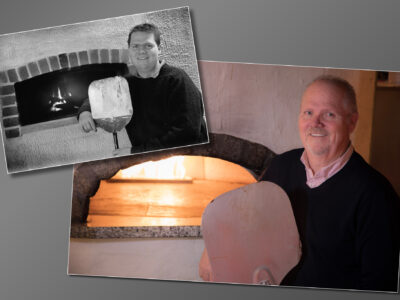
Instead of removing the pizza oven, Acuna embraced it. Flavors include Frida Lee-Jon, a pizza version of shrimp Lejon with bacon, shrimp, mozzarella and Chihuahua cheeses and chipotle-horseradish sauce. It is the only Del Pez with pizza.
The third Del Pez is in The Grove, the Newark complex that replaced the College Square Shopping Center. The new construction offers 6,700 square feet and nearly 300 seats. There is outdoor seating, which Acuna says is a must in a post-COVID world.
Hakuna is one of the few restaurant groups that has ventured into cities and suburbs, and it took a risk by entering the Riverfront market. However, Acuna is pleased with how the Wilmington Riverfront Development Corporation has nurtured growth and attracted customers and residents to the area.
“Over the years, people have formed a nice, healthy and safe community,” he says. “We’re proud of being part of that growth.”
A Careful Balance
Acuna will admit that the Mexican market in Delaware is becoming saturated, which is one reason Del Pez stands out. Some restaurant groups turn to diversity to increase interest and income. For instance, SoDel Concepts has seafood, Italian and Mexican concepts. Acuna says Hakuna Hospitality’s identity is deeply rooted in Latin American cuisine. Any new concept must align with his dedication to freshness, quality and vibrant flavors. Mediterranean fusion is a possibility, he says.
Presently, the hospitality group employs about 400 people. However, it could use 500. Acuna says advances in technology have affected the way people view manual labor.
“It’s not appreciated,” he says. “People don’t see how it could be a steppingstone to bigger and better things. We must find constructive ways to bring people willing to work into the restaurants.”
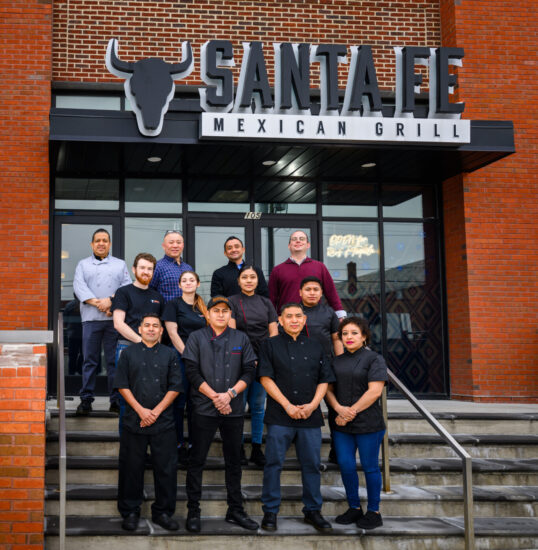
The staff at Santa Fe Mexican Grill in Wilmington.
This is why he volunteers with the Delaware Restaurant Foundation, which exposes young students to the industry.
“It shows them that it is a beautiful industry full of opportunities and rewards,” he says. “I strongly believe in education. I believe in leadership and that if you put your resources into future generations, you can ensure a better future for everybody.”
He’s also an advocate for sustainable growth. Salaries in hospitality have increased 30% in the last three years, but restaurant sales have not kept pace with the cost of wages or food, he points out.
Higher industry costs also include third-party delivery services and credit card fees — meanwhile, regulations, while well-intended, drive up the cost of doing business and affect how restaurants operate.
If it sounds stressful, that’s because it is. Acuna wakes up early to read emails and industry news and often ends the day doing the same. However, he takes time to exercise and eat healthy foods — as much as he can in the restaurant industry. He spends time with his wife, Sarah, and his children, ages 4 and 11, and has a mindfulness practice.
“I believe that if you’re not staying positive and engaged and if you don’t look for ways to be passionate about your restaurant and motivate yourself, you can’t motivate anyone else,” he says. “It’s your number one duty. The healthier you are mentally and physically, the healthier your company will be.”