
Kubo and the Two Strings demonstrates the artistic potential of the art of animation
Feature-length cartoons have never deserved to be dismissed as cinema art—as they have been since the first ones were created in the 1930s. Granted, Disney always favored the entertainment end of the spectrum, and many animated movies today are primarily intended to make money off family audiences.
Nevertheless, animation artists have endeavored to bring more to their work than just friendly animals voiced by celebrity actors and colorfully fantastical backdrops (see the Cinema Six Pack on page 85 for several worth watching). Kubo and the Two Strings is one such effort, providing fun and adventure for the adolescent set while still containing some imagery and ideas to sustain the adults in the theater.
The story of Kubo and the Two Strings feels familiar and follows some recognizable tropes of the fairy tale format, even though it is an original story. Kubo is a young boy in land that evokes medieval Japan. A talented origami artist, musician and storyteller, Kubo divides his days between caring for his troubled mother and earning some money entertaining the villagers with his strange tales of samurai warriors and mystical foes. As only happens in fairy tales, circumstances put him right into one of his stories and he must go on a quest to find a magical suit of armor that will allow him to restore his distressed family.
Kubo’s narrative is really just a framework for the creators (director Travis Knight and writers Marc Haimes, Chris Butler, and Shannon Tindle—all experienced animators) to weave a visual tapestry that resembles the complex yet delicate art of origami. The film is always beautiful and intricate, even when the bones of the plot itself are predictable, if not creepy.
The result is fast-moving, sophisticated and ultimately rewarding, both visually and emotionally.


Kubo and the Two Strings benefits from confident and droll voice work from Charlize Theron, Matthew McConaughey, Ralph Fiennes, and young Art Parkinson as the title boy. I do have to note, with disappointment, that a film set in ancient Japan and designed to evoke the richness of Eastern culture is sadly devoid of actual Asian voice actors. George Takei and Cary-Hiroyuki Tagawa are present only as minor characters, while the leads are all Anglos. Although the voice talent is excellent, it still feels like an unnecessary slight and a missed opportunity.
But I applaud Kubo and the Two Strings for being more than just a straightforward fairy tale. By investing the story with a rich graphic palette and by exploring cultures less familiar to American audiences, the movie demonstrates the versatility and potential depth of the art of animation.
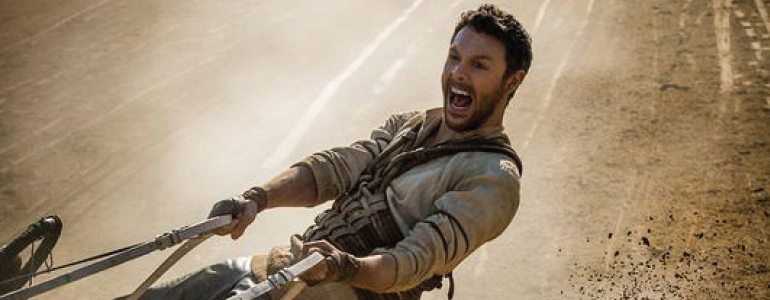
Jack Huston as Judah Ben-Hur. (Photo courtesy of 2016 Paramont Pictures)
Ben-Hur
All you need to know about the newest remake of Ben-Hur is that it is directed by Timur Bekmambetov, the man who brought you Wanted and Abraham Lincoln: Vampire Hunter. Clearly, with that pedigree, this is not going to be any deep exploration of cultural identity or even a facile Christian morality play. It’s going to be two hours of vaguely embarrassing sword-and-sandals exposition before we get to a caffeinated chariot-race finale chock full of CGI effects. Sadly, even the chariot race disappoints, because its desire to provide bigger, more violent, and “cooler” effects overwhelms the humans at the center of the drama. A paint-by-numbers script and wooden performances only add to the silliness. Somebody in Hollywood thought another remake (this is the fifth film adaptation, including a 2003 animated version) was worth doing; I fail to see why.