
By Ken Mammarella
Everyone has a book in them” and “Everyone has a story” set the stage for deeper reflection about the writing craft. Who better to complete those thoughts —and assess the fate of reading and contemplate the local literary scene — than dedicated local writers, plus the people they work with?
These experts were asked a question or two about finding creativity, polishing their words, and getting published. They were also invited to speak to issues that matter to them.
First, a bonus tip from me. I started being paid as a writer when I was a University of Delaware student. My writing has been almost entirely in journalism, but I have a tip that can help any writer, developed from work as a Wilmington University adjunct professor teaching writing, reporting, and editing.
Use AI.



I’ve used AI to brainstorm for classes, but I think it still makes up too many facts (a trait called hallucinating). To quote Google: “Gemini can make mistakes, so double-check it.”
I don’t ask AI to write or rewrite content, because I want to control tone and style.
But I do rely upon AI as a layer of editing. When I finish a piece, I ask Microsoft’s Copilot to list issues in mechanics, usage, grammar, and spelling. It’s amazing what I missed that it catches. I review each point and decide if it’s a correction I need to make or advice I choose to reject.
The other day, a student asked for a recommendation letter. While reviewing the job posting, I saw a typo (suit instead of suite). Copilot found six more mistakes — for a job that called for proofreading.
Breaking In and Breaking Out

Marc Avery
“Many moons ago, I self-published my first two books and eventually launched a small publishing company. That experience taught me a lot, but when it came time for my third novel, I knew I wanted to pursue traditional publishing. So, I did everything I could to prepare. I consulted with an editor from a Big Five publisher, got my manuscript professionally edited, and studied every book deal I could on Publishers Marketplace. I wanted to walk into this unfamiliar world as informed and ready as possible.
Somewhere along the way, I was given a piece of advice I’ve never forgotten: Always have multiple irons in the fire. Naturally, I started writing two books at once, believing that if one didn’t sell, the other might. The goal was simple. Get my foot in the door, build an audience, and grow from there.
Funny enough, my current agent initially passed on me. But she also offered honest feedback on how to strengthen my query letter. I took her advice, revised my manuscript, and submitted that manuscript to her again. Two book deals and 10 years later ,we’re still together.
Once I got the release date and cover art for my novel Discipline, I wrote a detailed marketing plan. My main priority was visibility and readership. I felt like a book tour would help me gain both.
I reached out to 100 bookstores by phone and email. About 30 responded, and I focused on those within a two- to three-hour drive from where I live. In 2026, my plan will shift to visiting the top 10 biggest cities in the U.S.
My advice would be to reach out to bookstores. The worst they can say is no. In this case, you’re no worse off than before. The most important thing is to make the attempt and live with the results.”
— Delaware resident Marc Avery threw a ’90s crime drama, a buddy cop film and a true crime documentary into a blender for Discipline. Details: IAmMarcAvery.com
The Horror, the Heroism, the Real Life

Scott T. Phillips
“To serve as a cop in New Castle County is, over the years, to become a connoisseur of the many ways in which individuals can break each other apart, and how, against all odds, something like love or decency sometimes survives the demolition. This is the ‘dark side,’ the reality where every day I was forced to bear witness, to absorb the horror and the heroism that play out in the aftermath of crimes. My books — The Dark Side of Death and The Dark Side of Honor — were a concentration of the experience.
I have always been fascinated by the tangled web politics weaves through the daily workings of law enforcement. It’s never just a matter of upstanding officers upholding the law; there is always some invisible hand, some ulterior motive at play. Politics doesn’t just interfere at the national level with grandstanding senators and televised hearing; it poisons the roots of every police agency, both local and federal, affecting who gets promoted, which crimes are prioritized, and who is allowed to quietly slip away unpunished.
I have gained experience with a couple of cases I investigated, combined them with some embellishments from the national level, and gave them international locales to make them interesting.
I’m working on a book, tentatively titled Dante’s Prayer, which has a 1940s setting in Wilmington. It originated from a song, ‘Dante’s Prayer’ by Loreena McKennitt. The lyrics and the music haunted me in a positive way. I had some basic thoughts when I first heard it some 30 years ago but put them on the back burner. While I was driving for Delaware Express, I met a woman who told me about her father who was in World War II and was shot down over Berlin, held in a POW camp for one year, and then released with physical and mental scars. This intrigued me, and I felt compelled to write it.
Inspiration comes in many forms and at various times. You just must be awake and listening.”
— Brandywine Hundred resident Scott T. Phillips, writing as S.T. Phillips, self-published two books — The Dark Side of Death and The Dark Side of Honor — that each received an Indie Book Award. He is working on a third book, Dante’s Prayer.
The Pluses and Minuses of Writing A Series

David Healey
“Mostly I had written stand-alone non-fiction books or novels, and that’s what I had in mind when I wrote Ghost Sniper, a World War II thriller featuring a U.S. Army sniper named Caje Cole who lands at Normandy on D-Day. It accidentally turned into a series because the book was such a success and so many readers wanted the adventures of Caje and the other soldiers to continue that I thought, why not? There are 10 books so far in the series, which continues into the Korean War.
I’m writing a similar series set in the Pacific Theater and also a Civil War series. A series enables the writer (and readers) to relate more deeply to the characters and the time period. Still, each book requires a great deal of research into a battle or campaign and a fresh plot, and there are always new characters coming and going — especially those who don’t learn to keep their heads down.
I remember the author Jon Land speaking at Thrillerfest in New York and telling writers to be careful what they chose to write, because that kind of story might end up being all that readers wanted from them. There has been some truth to that in my experience because my contemporary thrillers and mysteries haven’t been as popular, but I have to say, I never get tired of my series characters. They keep me company and sometimes keep me up at night with their stories that need telling.”
— David Healey lives in Chesapeake City and writes two series starring cousins during World War II. Samurai & Snipers, his 31st book, came out in June. Details: DavidHealeyAuthor.com
Writing Doesn’t Have to be Lonely

Maribeth Fischer
“I founded a writing conference to raise money for a charity, and so many attendees showed up to that conference, despite the lack of publicity (or knowledge of how to run a writing conference at all), that I realized there was a need for a writing community. The Rehoboth Beach Writers Guild hosts over 30 different events for writers every month — Free Writes, book clubs, discussion groups, classes, themed readings and conversations with published authors. Maybe it’s just one continuous conference all year long! It helps enormously for writers to have this community. Writing can be so lonely, but it doesn’t have to be. The encouragement we offer each other, the validation, and the celebration when one of us accomplishes something keeps many of us going.”
— Maribeth Fischer is the founder and executive director of the Rehoboth Beach Writers Guild. She has received three Delaware Division of the Arts Fellowships and two Pushcart Prizes for her essays. Her two previous books, The Language of Good-bye and The Life You Longed For, have been sold in six foreign countries. She holds an MFA in creative writing from Virginia Commonwealth University. Her most recent novel is A Season of Perfect Happiness.
What Publishers Really Want

Keith Bosco
“Publishers want a good story. It might seem like a generic answer, but it’s true. The challenge for us authors is to take something that we find interesting and make it interesting for other people. I thought my first draft was solid gold. Then a writing mentor of mine read it and basically told me I had to rewrite the story to make it more interesting. She advised me to add more characters and to further develop my plot. I hated her suggestion at first, but I’m so glad I listened to her because it really helped make my story better.
I think it’s important to realize that turning an idea into a book is not a quick process. Looking back, I see now that my desire to publish a children’s book quickly led me to rush through my original plot. When I took the time to roll up my sleeves and work on the story, I saw the concept grow from infancy to maturity. It’s worth making the time and putting in the work to develop your story. With that being said, it can be daunting and discouraging at times, so find a mentor if you can or a few trusted people who will encourage, challenge, and motivate you.”
— Greenwood resident Keith Bosco has written two children’s books and founded Yellow Light Publishing to help other authors turn their stories into books. Details: YellowLightPublishing.com
The Hard Work After a First Draft is Finished
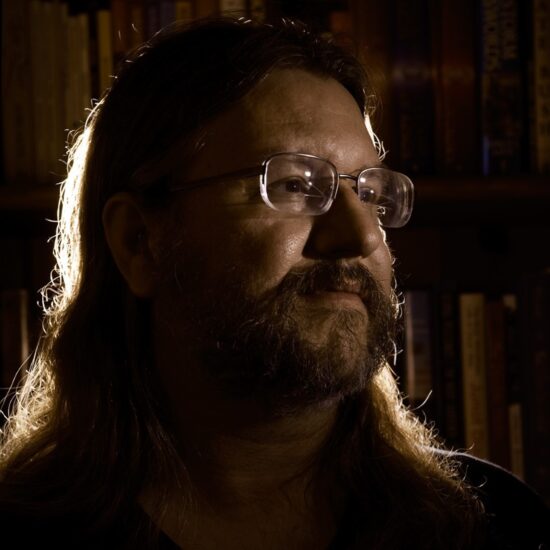
Greg Schaeur
“You have finished your first draft. Congratulations, typing the words ‘the end’ is a great feat. Be proud. Now it is time to make it better. That is what editing is for.
I start writing longhand in a notebook. My first edit is done while transferring it into the computer. Then there are a few more passes before anyone sees it. Next it goes to a critique group, then to the editor. At each stage valuable changes and feedback improve the story.
Self-editing is important, but no matter how many times you read it, you won’t find everything. You are too close to the piece, and your brain will, sometimes, show you what you expect to see, not what is actually on the page. Or what you think you are writing isn’t the way the reader will interpret it.
Because you are so close to the project, some things will be overlooked. Here are a few that an editor will point out:
• Word echo: Using the same word too often in a paragraph or page.
• Spellcheck errors: Spell check is a wonderful tool, but it is not perfect. Many times, it will ignore an actual word in the wrong context because that word is correctly spelled.
• Favorite words: Every writer has words they tend to overuse. These words are different for each writer and can change story to story.
• Crutch words: Are words that slip into our writing slowing the flow of the narrative. While some of these words may be useful from time to time, limiting their use will improve the work. Some examples: Heard/hear, just, really, almost, appear, seem/seemed, beginning, started, a bit, a lot, very.
• Natural-sounding dialogue: Dialogue doesn’t always follow the rules of grammar. People take shortcuts when they speak. Reading dialogue out loud is the best way to discover if it sounds right. If it doesn’t feel right coming out of your mouth, if it doesn’t sound right when you hear it, it isn’t.
In the end, the more polished the story is, the more enjoyable and salable it will be.”
— Claymont resident Greg Schauer founded Between Books in 1979 and has been a bookseller for more than 45 years. In 2015 he helped co-found E-spec books. He has worked on more than 200 books and comics as an editor. Details: GSchauer@BetweenBooks.com
Every Work is a Collaboration

Claire van den Broek
“As a bookstore owner and as a professor who teaches in a graduate program in literature and creative writing, allow me to offer one of the most helpful pieces of advice I can (based on what we often see in self-published submissions) — consider taking a writing workshop or a creative writing class. These can be incredibly valuable, even for those with a natural gift for storytelling. Many writers skip working with an editor, but editing is essential, and even the best writers benefit from a strong editorial eye. There are skills every writer can learn and practice to strengthen their craft. Some common issues we see include inconsistent use of verb tense, “telling” instead of “showing,” misused vocabulary and overlooked typos. Writing classes and workshops, along with good editors, can help address these issues and make the work more polished, engaging, and ultimately more successful.”
— Claire van den Broek, PhD, co-owns Huxley and Hiro Bookstore in downtown Wilmington. She also works as a professor in a graduate program in literature and as a literary translator.
What a Writing Coach Can Offer

Liz DeJesu
“Each author has their own unique challenges, questions and concerns. What’s so magical about doing workshops and working with authors is that I can give a group of people the same questions or writing prompts and every single person will write something completely different.
The most important thing for me is to be patient, kind and honest. When an author sends me their work and/or asks for my feedback, I let them know the best way to make the story shine without crushing their creative spirit. It’s imperative for authors to feel they’re being taken seriously and that you’re giving them constructive criticism. I have been part of writing groups where all they want to do is tear your work to shreds without offering actual feedback. And that can seriously deter someone from pursuing a career as a writer.
I’ve done workshops for writers of all ages, and I do what I can to make them fun, because in the end that’s what writing is supposed to be.
Here’s a fun writing exercise to try at home: Listen to a song (any song), and jot down the first five words that come to mind when you hear the music or lyrics. Use those five words to write a poem or sentence. And remember … have fun!”
— Wilmington resident Liz DeJesus is a novelist, freelance writer, and writing coach. She is the author of The Frost Series, Zombie Ever After, ABCs With the Vejigantes, and The Laurel. Details: Liz-Dejesus.com
Building a Community of Writers

Constance Hays Matsumoto
“Developing relationships with other writers and people in the publishing industry increases a writer’s possibility for success exponentially. While writing my debut novel, Of White Ashes, I managed my time with intention, making time for the page, community, and the business of publishing. Each supports the others. For me, juggling art, community, and business is an act of balancing disparate, but important concepts.
Developing meaningful connections and relationships is a valuable investment of a writer’s time.
I’m not referring to networking, which is often thought of as transactional interaction for personal gain. I’m talking about being in community where deeper connections are formed, where people learn from and are there for one another.
Networking is exchanging business cards. Building community is showing up to celebrate someone else’s success.
New writers may feel uneasy entering a room of other writers, like they don’t belong. They may even feel unworthy to be around other writers. I did. But those feelings of insecurity passed quickly. Why? Because writers are giving people.
To find community, I searched for local writers’ groups. Some experiences didn’t fit. Others did. My first step into this world was a coffeeshop meet-up where writers congregated to write. No one talked to each other. Why, I thought, had I driven 45 minutes to sit in an uncomfortable chair to write in silence? Clearly, this wasn’t the space for me. But the space fit what other writers were there for — to find community and write. My second step was into a writers’ critique group at my local library. There, I found my people — writers of all levels who wanted to share and receive feedback on their work. And I asked myself, who am I to give feedback on a writer’s work when I have no idea what I’m doing? I soon realized, I’m a reader, with something to offer.
The internet and other writers were good sources for me to learn about professional writers’ organizations in my region. I joined local chapters of national organizations that opened wider opportunities. I attended conferences. Wherever I went, I tried to be authentic. I listened to and absorbed other writers’ stories and asked how I could assist them in their journeys. By supporting others, I benefited. Finding community and engaging in literary citizenship reaps endless possibilities.”
— Constance Hays Matsumoto authored Of White Ashes, a historical novel inspired by the true stories of her family. The Greenville resident is working on a non-fiction book for a niche publisher (due for 2026 release). She also serves as president of the Women’s National Book Association Mid-Atlantic Chapter. Details: MatsumotoBooks.com
The Words Truly Live in the Air
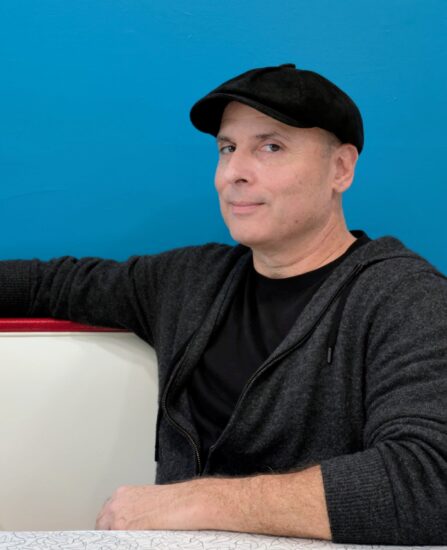
Matt Casarino
“One thing I’ve found as both a songwriter and playwright is that the mediums are very similar. In both cases, the words we write aren’t meant to be read on the page, but spoken/sung by actual people. So, in both cases I focus a lot on the rhythm, the lifts and falls of the words, the inherent music in what the singer/character is trying to convey. And in either case the song/play isn’t complete until it’s being performed — it doesn’t live on the page, it lives in the air, in the ears and (in the case of plays) eyes of the audience. So as a writer, I want to give the singers/actors as much room as possible to use their own crafts to convey the emotion of the piece.
The major difference between the two is that the core of a play is in the words, but the core of a song is in the melody and chords. Songs don’t need words, of course, but when they have them they are intrinsically tied to the music. You can read the words of great lyricists — Paul Simon, Bob Dylan, Leonard Cohen, Chrissie Hynde, Chuck D — but they don’t really work as poetry, because the music is what lifts them into our ears. The best songwriters understand this, and know how to use melodies to carry their words, lingering on particular lines, letting the high note resonate with the perfect sounds.
I also think the word playwright is a misnomer. We don’t write plays. We write scripts, which is only one part of a play, along with actors, directors, lighting techs, sound techs, stage managers, costumers, prop techs, and — maybe most importantly — an audience. I’ve always considered scriptwriting as one part of a very collaborative effort — an important part, but a lonely part. I mean, if I write a script and it never becomes a play, does it even exist?”
— North Wilmington resident Matt Casarino has written more than 30 plays, including The PornoZombies, Larry Gets the Call, and Goldilocks (The Musical). His three solo records and three albums with his band Hot Breakfast! with Jill Knapp feature his original music.
The First Commandment: Write Every Day
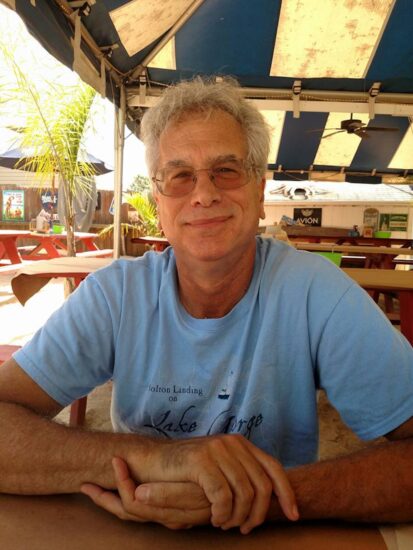
William Francis Albensi
“If you’re going to write — then write. No excuses. Find a secure place and a time of day that works best for you and stick to it, day after day. It’s your duty. You must have confidence, be self-motivated, and be disciplined. If you’re easily distracted or need a boss looking over your shoulder to spur you on, it won’t matter how talented a writer you are, you won’t finish the task. A routine schedule and determination are essential.”
— William Francis Albensi (who writes as William Francis) grew up in Newark and is retired and living in Garnet Valley, Pa. He has published 10 books related to Delaware, five novels, two self-published, and five photographic histories for Arcadia Publishing. He’s currently under contract to complete a sixth title due for release in 2026: Wilmington Before I-95.
Young People Should Be Encouraged to Read

Cindy Callaghan
“The unfortunate reality is that YouTube, TikTok, social media and gaming are taking kids and teens away from reading. As such, the children’s book market has been declining. I hope schools continue programs like Drop Everything and Read, One Book, and Silent Sustained Reading, in an effort to encourage reading. Further, stocking shelves and summer reading lists with books that are light, fun, funny, and fast-paced will draw readers in young.”
— North Wilmington resident Cindy Callaghan is the award-winning author of 11 middle-grade novels, including Just Add Magic 1 & 2, which were made into an Emmy-nominated Amazon Original series. She’s well-known for the five best-selling Lost in… books. Award-winning Saltwater Secrets is set up by a major studio.
On the State of the Local Literary World

Steven Leech
“Our local literary community is richer than we might suppose. The volume of work from Wilmington and Newark authors and poets has grown immensely since the 1960s, but to my understanding and experience, our literary community extends to the grateful dead, grateful because they are remembered. Their stories, extending over a couple centuries, both written on the page or lived off the page, are filled with their visions that define our own particular local culture today and, hopefully, for the future.”
— Newark resident Steven Leech has been writing since 1959. Since 1980 he has been an editor for Dreamstreets, a multimedia literary magazine. Details: DreamStreetArchive.com
Huxley & Hiro Presents: Delaware Fall Author Fair
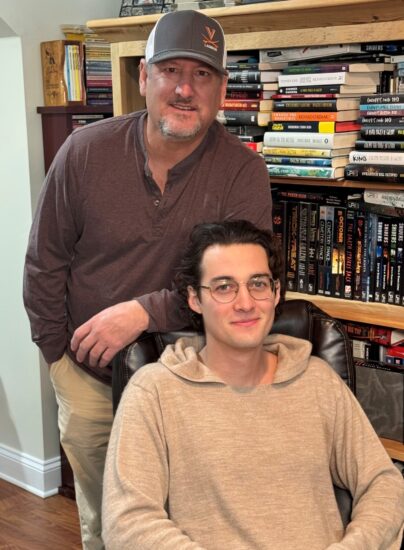
Richard and son Billy (W.H.) Chizmar
More than 50 area authors will gather at The Queen in Downtown Wilmington on Sunday, October 26 for the Delaware Author Fair presented by Huxley & Hiro Booksellers.
Highlighting the attendee list will be Richard Chizmar, a New York Times bestselling author, who co-authored The Gwendy Trilogy with friend and colleague Stephen King. Last year, Chizmar published Memorials to great acclaim and will be appearing at the festival with son Billy (W.H.), his co-author in Widow’s Point, which was recently made into a feature film.
Other authors in attendance include P. Finian Reilly, William S. Knightly, Adriana Camacho-Church, Dani Diaz, Amy Blackthorn, Keli O’Connor, Dorian Moore, Liz DeJesus, Kevin McGonegal, Allison Whittenberg, Tom Bates, Mark Lawlor, Maria Levato, Amber Ricketts, Viet Dinh, Dave Tabler, Sarah Edmonds and Victoria Kimball.
The Author Fair will focus on Delaware authors writing horror, thrillers, romance, science fiction and fantasy. It will be held from noon-3pm for an admission fee of $5. An early-access option is offered for $10, permitting attendees to enter at 11am. Tickets at HuxleyAndHiro.com