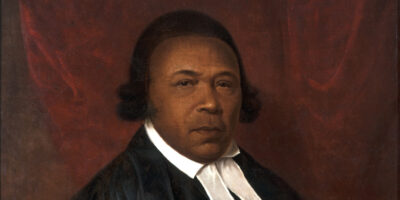


Above: This 1810 portrait of Absalom Jones was once housed in the Absalom Jones School near Wilmington and later donated to the Delaware Art Museum where it is on long-term display. Absalom Jones, 1810. Raphaelle Peale. Delaware Art Museum, Gift of Absalom Jones School, 1971.
By Cheryl Renée Gooch
The Enduring Legacies of Absalom Jones, Richard Allen and Peter Spencer — Delawareans Shaped by the Revolutionary Era
An oil painting of Absalom Jones (1746-1818) hangs on permanent display at the Delaware Art Museum. His resolute gaze invites visitors to see and become motivated by the Revolutionary era’s calls for liberty and human rights that resonated deeply with him. The Delaware native witnessed the American Revolution and emerged from slavery to become a leading church leader and advocate for social justice.
Enslaved through adulthood, Jones secured freedom first for his wife and then himself. He established (along with Richard Allen) the Free African Society in Philadelphia, an organization dedicated to mutual aid and the advancement of African Americans. In 1794, he established the African Church of St. Thomas, the first Black Episcopal church in the United States. Beyond the pulpit, he advocated for the abolition of slavery, petitioned Congress for an end to the slave trade, and provided support during the yellow fever epidemic of 1793 alongside his colleague Richard Allen.
Jones’s commitment to equality and religious freedom exemplified the revolutionary spirit. Two Delaware sites pay tribute to his legacy: the former Absalom Jones Colored School building in Belvedere, now a community center; and the Absalom Jones Historical Marker in Milford near his birthplace.



Richard Allen (1760-1831), like Jones, was born into slavery. He lived near Dover where he became involved in the Methodist movement. While the harsh realities of bondage shaped his early life, religion and Revolutionary ideals motivated him to pursue both physical and spiritual freedom. He managed to purchase his freedom and during the Revolutionary War hauled salt from Rehoboth and preached in communities along his route.
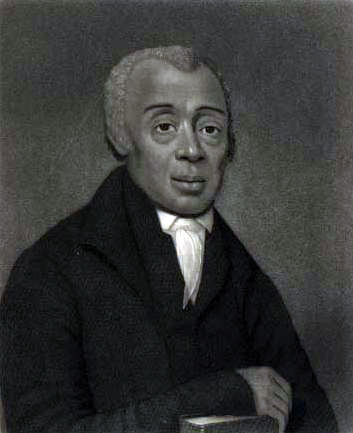
Richard Allen devoted his life to the ministry after preaching in Wilmington in 1783. Photo from History of the African
Methodist Episcopal Church (1891), Daniel A Payne.
On September 13, 1783, Allen preached in Wilmington, likely at a meeting of the Methodist Society. This society would later build Old Asbury Methodist Church at Walnut & 3rd streets in 1789. Around this time, he dedicated himself to full-time ministry advocating for African-American education and organizing relief efforts for the poor. In 1794 in Philadelphia, he founded the African Methodist Episcopal Church (A.M.E.), which still has significant U.S. and global presence.
A 2016 U.S. stamp commemorates Richard Allen’s enduring, revolutionary impact through the A.M.E. Church and his work for education, civil rights, and humanitarian efforts.
Peter Spencer (1782–1843), who was guided by Richard Allen, played a critical role in shaping the religious landscape for African Americans. Born into slavery in Kent County, Spencer eventually gained his freedom and became a preacher. In 1813, he founded the Union Church of Africans in Wilmington, the first incorporated, independent African-American denomination in the country. Spencer emphasized the importance of self-governance, mutual support, and spiritual empowerment. His church offered religious guidance as well as education, job training, and social services to its members. In 1814 Spencer established the August Quarterly, one of Wilmington’s oldest annual religious and cultural meetings, which became a vital gathering for African-American communities in the region.
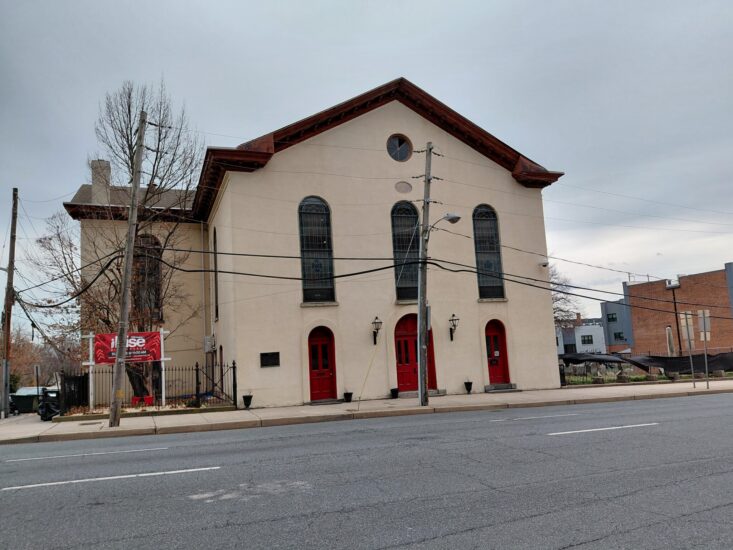
The Methodist Society built the Old Asbury Methodist Church at Walnut & 3rd streets in 1789. Photo from Author’s collection.
Spencer’s leadership reflected Revolutionary-era values of liberty and self-reliance. Wilmington’s Peter Spencer Plaza stands as a testament to his enduring influence on religious freedom and community empowerment. His Union Church of Africans is now the African Union Methodist Protestant Church and Connection, Inc. (A.U.M.P. Church). It currently has a total of 24 locations with 16 active congregations in Delaware, New Jersey, New York, Pennsylvania, Maryland, and the District of Columbia.
Absalom Jones, Richard Allen, and Peter Spencer embodied Revolutionary era ideals of freedom and equality that drove change. They established institutions for African Americans and advocated for abolition and human rights, paving the way for future movements and leaders.
In celebration of Delaware 250, this monthly series will spotlight historic people and sites unique to our state.