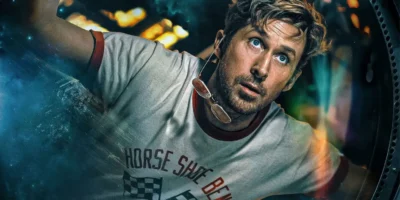


Above: Synthesizer wizard Gary Numan was once an aerobatic display pilot. Photo courtesy of Gary Numan.
By Mike Pollock
If you want to see what true happiness looks like, go to YouTube and pull up the clip of Gary Numan performing his hit “Cars” with Nine Inch Nails in Numan’s native London, from 2009. There you’ll find the electronic-music legend, 51 years old at the time, grinning ear-to-ear as the audience roars approval for one of the catchiest songs ever.
“Cars” was just one of Numan’s many great synth-pop songs about the relationship between people and machines that propelled his career in the late 1970s and early ’80s. The ensuing decades saw Numan struggle commercially and creatively, but his catalog has had amazing staying power and finds its way into some unlikely places. Prince, Kurt Cobain, and Lady Gaga have cited Numan as an influence; his songs have been covered or sampled by Foo Fighters, dance act Basement Jaxx, Jack White-led supergroup The Dead Weather, and hip-hop figures like J Dilla, Wu-Tang’s RZA, and Q-Tip. (If you’ve never heard it, stop what you’re doing and give Nine Inch Nails’ cover of Numan’s “Metal” a listen.)
Numan found his footing again starting in the early 2010s, and the four albums he’s released since embrace electronic music’s darker, heavier shades. Recent shows have incorporated newer tunes while leaning into the past, a perfect blend for an artist who refuses to follow the rules. See for yourself when Numan plays The Queen on March 15.



 O&A: In your autobiography, (R)evolution, you write about the very careful planning that went into your Touring Principle and Teletour shows, as well as getting over some of your stage fright. How do you approach performing live now?
Gary Numan: Well, stage fright faded away decades ago, I’m pleased to say. I’ve been doing this for so long now [that] being on stage is as natural as driving my car. I used to rehearse for weeks at a time because I was so worried about any of us in the band making even the smallest of mistakes, me especially. I came to realize that with a truly professional band you don’t need to worry, or to rehearse for long periods, and that little mistakes will happen regardless of how thoroughly rehearsed you are. It’s how you handle them that matters. In many ways, touring became far more fun, far less stressful, and we are far better at what we do.
O&A: In that same autobiography, you write extensively about your love of flying. I was especially struck by the part where you say your success as a pilot helped balance out your struggling music career in the mid-1980s. Do you have plans to fly again?
GN: I spent most of my years flying as an aerobatic air-display pilot, flying World War II airplanes upside down at various airshows around the UK and Europe. I loved it, and spent almost every spare minute away from music either flying in airshows or practicing for them. But then I got married, and [my wife] Gemma didn’t share my enthusiasm. Then we had children and being a display pilot began to feel like a reckless and dangerous pastime for a man with young children to take care of.
Display flying is certainly dangerous. Of the six people that were in the team I joined, four died in accidents over the next few years. I haven’t flown airplanes for many years now and I do miss it very much. I would love to fly again, perhaps not as an air display pilot, but [doing] something. I don’t know if it will happen, though. My hearing is so bad these days I doubt I would know what air traffic was telling me to do. It’s good enough to sing my own songs but not to follow precise instructions.
O&A: You’ve been releasing remastered versions of your older albums over the last year. (Ed. Note: The great Telekon was reissued digitally this past December for its 45th anniversary and re-released earlier this year on vinyl and CD.) What stands out to you most when you revisit those albums?
GN: It depends on the album. With some of them, when I listen to them again all I can hear is the things I could have done better. The flaws leap out at me. On others, Telekon being a prime example, I’m aware of how risky they were at the time. Telekon was a bold, experimental album to make back then, especially on the back of two UK No. 1 albums. I had a lot to lose by making an album that strange. It actually made me feel proud of the choices I made 45 years ago. I was clearly moving forward in an exploration direction, as opposed to following a safer, more commercial path.
O&A: What about new music? Can we expect another record after 2021’s Intruder?
GN: I did start the new one at the end of 2024. Unfortunately, Gemma began to suffer from a series of health problems, [which] led to other problems, and we are still looking for answers for some of those. I found the worry of that, and the time it takes to spend half your life traveling to and from hospitals, so distracting [that] I gave up on new music temporarily. I just couldn’t think about arty things and melodies when Gemma was in such trouble. Hopefully we are near the end of that journey now, just one more big problem to fix. With luck we’ll be back home in April, Gemma will be good, and I can let my mind drift off into that dark little corner where all the ideas seem to come from. If things go well and the ideas flow easily, I hope to have the next album out in the first half of next year.
O&A: Speaking of new music, what is Gary Numan listening to these days?
GN: I don’t listen to music, not for pleasure, anyway. I can’t remember the last time I sat down to listen to an album for the simple enjoyment of immersing myself in music. It’s certainly decades ago. I don’t find it relaxing at all. I don’t listen to the radio, not at home or when I’m driving. On tour, when the band and crew stay up all night in the bus lounge listening to everybody’s favorites, I disappear to my room. I do get to hear lots of music, though, because my entire family are playing things 24 hours a day.
When I was younger, listening to music was everything. I came home from school, went up to my room, played music, hardly spoke to anyone…That all changed when music became my way of life. I don’t really know why, but I suspect it’s because I find it impossible to listen to it without analyzing how it was done. How did they get that snare sound, where is that growl coming from, what effect is that on the voice, and so on. Listening becomes more like a research study than a pleasure. I still love making music, though, and that’s the most important thing for me.
— WXPN welcomes Gary Numan to The Queen on Sunday, March 15. More at TheQueenWilmington.com.