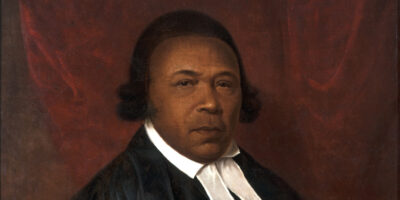

Above: On October 23, Jobs for Delaware Graduates (JDG) celebrated its 45th Anniversary with a sold-out event at the Hotel Du Pont’s Gold Ballroom. Among the speakers that night were two graduates or the program: Darren Blackston, (right) and Seth Kenner.
By Ken Mammarella
Photos Provided
Jeremy Moore is “very grateful to be a part of this secret club” that met in Room 007 of Mt. Pleasant High School in North Wilmington and how it has led to success in his life and his career.
Only it was not a club, but Jobs for Delaware Graduates, which teaches skills that young people need. His classmates, he recalls, viewed it mostly with envy, explaining “I wish I had learned that.”
“Our mission is to enable students to achieve academic, career, personal and social success,” the nonprofit writes on its website, JobsDeGrads.org.



“We’re receptive to the fact that it’s OK for 17-year-olds not to know what they want to be,” says Nicole Poore, who’s been president of Jobs for Delaware Graduates for 10 years (and whose career path has involved a desire to be a state trooper, training as a nail tech, three college degrees, corporate work and now a commitment to give back to society through a nonprofit). “In fact, we’re finding out that there are people who are 35 and don’t know what they want to be.”
That lack of future clarity and other identified needs are why the program emphasizes foundational skills, such as the nine on a slide she shared: communication, teamwork, critical thinking, emotional intelligence, finance, careers, entrepreneurship, life skills and JDG speaks up (on societal issues).
“We’re receptive to the fact that it’s OK for 17-year-olds not to know what they want to be,” says Nicole Poore, who’s been president of Jobs for Delaware Graduates for 10 years (and whose career path has involved a desire to be a state trooper, training as a nail tech, three college degrees, corporate work and now a commitment to give back to society through a nonprofit). “In fact, we’re finding out that there are people who are 35 and don’t know what they want to be.”

The JDG program emphasizes nine foundational skills that focus on academic achievement, employability, and soft skills. Image courtesy of JDG.
That lack of future clarity and other identified needs are why the program emphasizes foundational skills, such as the nine on a slide she shared: communication, teamwork, critical thinking, emotional intelligence, finance, careers, entrepreneurship, life skills and JDG speaks up (on societal issues).
“Growing young people into adults is quintessentially the work that Jobs for Delaware graduates does,” says David Sheppard, a board member for almost eight years. “Which we do very effectively, with a more solid foundation for academics, success in professional careers and their lives, with skills that will matter for the rest of their lives.”
Since its founding, Jobs for Delaware Graduates has involved 94,000 students and 250 employers. Over the years, it has expanded from high school seniors to seventh through 11th graders and to out-of-school youth. In the 2024-25 school year, it is serving 3,800 students in 23 high schools and 15 middle schools, Poore says. The program employs 39 teachers, one for each school and two at Stanton Middle.
It runs on a budget of about $4.8 million a year, sourced from grants, contributions and fees from participating school districts. That breaks down to about $2,100 per student, she adds.
Poore believes schools have multiple reasons for inviting the program in: They’re fully booked in teaching mandated subjects; they might be short on teachers and appreciate another professional in the building; and they believe that Jobs for Delaware Graduates can pivot faster as students’ needs change.
Jobs for Delaware Graduates also is helping to ease the teacher shortage by “working hand in hand with Wilmington University” to certify teachers coming from other careers.
Many students enrolled have barriers to success, like learning disabilities (about a third), low income (ditto), learning English as a foreign language (9%) and homelessness (2%). Other barriers include low grades and absenteeism. These barriers show up in testing: of the 261 participants in the 2020-21 school year who took the SAT, more than three-quarters were deficient in English or math.
“Jobs for Delaware graduates exists to empower these kids,” Sheppard says, adding that he is teaching son Jacob many of the same skills. “I talk to him all the time about investing.”
“Everyone has a barrier,” Poore adds, suggesting “it could be just not knowing what they want to do in life.” That’s why the program started an internship/co-op/job shadowing program for high school seniors called Creating Opportunities for Real Experiences.
One CORE participant is ChristianaCare, Delaware’s largest employer, where the most popular experience involves the engineering department, responsible for all that high-tech medical equipment. Architectural Alliance, which lists just 11 team members on its website, opened students’ eyes when architect Kevin Wilson told them that computer-assisted design doesn’t need a college degree. “It’s that moment that a kid knows that they can actually apply somewhere because they do fit in,” Poore says.
For people trying to pivot to new careers, Poore says she used her other job, as a state senator, to work with Delaware Technical Community College President Mark T. Brainard to rewrite legislation to expand Student Excellence Equals Degree scholarships to Delawareans long out of high school.

Jobs for Delaware Graduates alumni Chaz Hendrix (left), Sirron Chambers, and Jeremy Moore.
Three Testimonials
For this article, Jobs for Delaware Graduates set up a joint interview with three alumni of the program at Mount, who all, coincidentally, served in the armed forces. They are Moore, a 2006 graduate; Chaz Hendrix, a 2012 graduate; and Sirron Chambers, a 2001 graduate.
All three cited the significant impact that the program has had.
All three also cited the influence of Randy Holmes, who has been a Jobs for Delaware Graduates teacher for 27 years, all at Mount, where he has been a football and track coach all those years.
For Hendrix and Chambers, who were raised by their mothers, Holmes is a revered father figure.
“He really cares and takes the time not just in high school but later to help you figure out your life’s path,” Hendrix says of Holmes. Hendrix now is living the American dream, with a family in Chadds Ford, Pennsylvania; a law degree; and a job handling contract management for Boeing.
“He got through to me, about things I didn’t realize about myself, such as my attitude,” Chambers says of Holmes. And he has thought a lot about those realizations while raising his six children.
“Outside of my parents, it’s the most meaningful relationship I have,” Moore says.
At Mount, most Jobs for Delaware Graduates work is done in class, to accommodate all those at-risk participants with troubled home lives. All participants receive job skills training (“all the skills you need to get a job and > perform in a job,” Moore says), field trips to post-secondary educational instiutions and businesses and leadership and community service opportunities. Students who identify with one or more barriers receive additional support, such as tutoring, job placement assistance, help with work attire and transportation and 12 months of follow-up services after graduation.
The program also influenced these three men to pay it forward, sometimes simply being a guest speaker in a Jobs for Delaware Graduates class, but also much more than that.
Hendrix mentors youth through Mt. Pleasant Baptist Church in Twin Oaks, Pennsylvania.
Chambers, a technical order manager for C-5 planes who lives in Warner Robins, Georgia, coaches youth sports, usually involving children 10 and younger, where the life lessons include teamwork and “the ability to overcome losing.” “I wish they had this program in Georgia,” he says of Jobs for Delaware Graduates.
And Moore co-founded, with Stacey Richardson, a Bellefonte-based program called More Than Fitness, for at-risk youth with similar demographics to many participants in Jobs for Delaware Graduates. Its focus: addressing mental health issues through mindfulness and fitness.
“I consider myself to be one of the most successful people I know,” Moore says. “I don’t make a ton of money. I don’t have a nice car. I live on the property of the nonprofit that I founded. But every day I do something that I love, something that makes an impact in people’s lives.”
Holmes is not the only one whose interest and help last far beyond the program’s formal end. “There are several students that over the years that I just cannot let go of,” Poore says. “They’ll probably never leave my life, and I hope that I never leave theirs.”
Poore says she and Holmes have both offered spare bedrooms when alumni needed them. “Bad things happen to good people all the time,” she explains. “I try to tell our students, ‘Listen, when you wake up in the morning and your glass is half full, you should be looking around to see who’s going to fill your glass all the way to the top. And if you wake up, and your glass is completely empty, then you need to figure out how to fill it halfway. Because there are a group of people that absolutely want to be there and help you fill it the rest of the way.’ ”
How It Began; How It Expanded
Jobs for Delaware Graduates was founded in 1978, a dark time for Delaware.
The state’s unemployment rate for young people and dropout rate were among the nation’s highest, recalls Ken Smith, then the chief education adviser to Gov. Pete du Pont.
“The state was in a terrible mess at the time, in near-bankruptcy,” he told Forbes in 2019. “Wall Street would not buy its bonds. The biggest employer, the DuPont Co., was threatening to leave because of high taxes, and Supreme Court desegregation decisions were dramatically changing schools in the northern part of the state.”
With the help of groups representing business, educational, workforce, labor union and community stakeholders, Smith was tasked with designing a program that would be more effective, accountable and cost-effective “for the most challenged young people.”
Jobs for Delaware Graduates and its national offshoot, Jobs for America’s Graduates, have proven to be all that. The national program has spread to 36 other states and has served 1.6 million students, at an average cost of $1,250 per student, Smith says, compared to similar programs that average $3,500.
Reasons that goals are met include “the energy, commitment and passion” of teachers, the vow to help participants for a year after high school graduation (60% of college dropouts drop out in their freshman year), connections to employers who want to hire job-ready applicants and ties to other nonprofits who can help students with housing, food and transportation.
Nine governors serve on the Jobs for America’s Graduates board of directors, the largest number of governors serving on any board in the nation, Smith says, adding that he hopes that two more governors join in 2025.
The students involved have varying needs, with learning disabilities and poverty prominent across the nation, he says. There’s a rising issue involving students in foster care and aging out of foster care, and Jobs for America’s Graduates helps them to ensure “they have what they need to live.”
Smith has heard many stories since leading the creation of Jobs for Delaware Graduates and being the founding president of Jobs for America’s Graduates, and he shares one with Out & About involving a Delaware graduate of the program. “You saved my life,” the graduate told Smith at an event. “I was planning on suicide until a jobs specialist found me and gave me opportunity and hope.”