
By Mark Fields
Earnest British WWI Drama Resonates, Somewhat
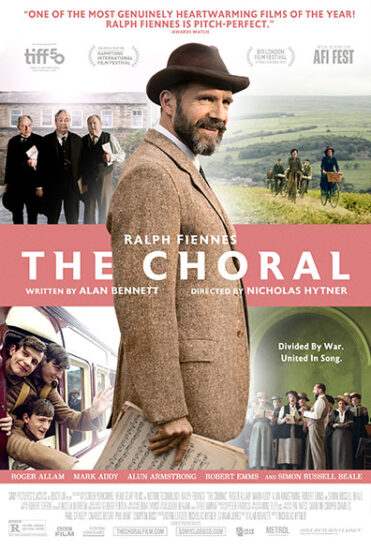 There is nothing especially wrong or off about The Choral, an earnest drama about a provincial community choir rehearsing an Edward Elgar oratorio in the depths of World War I. The acting – featuring a cast of mostly little-known British performers led by Ralph Fiennes – is solid if unremarkable. The script by playwright Alan Bennett is serviceable. And the story, though steeped in long-ago and continental history, may still have some resonance for contemporary American audiences. But the problem is that no aspect of The Choral is exceptional enough to generate much viewer enthusiasm. In fact, it’s easy enough to start forgetting about the movie even as one is leaving the theater.
Set in rural England in the midst of the Great War, the community of Ramsden is attempting to mount their annual choral performance. But the ranks of the choir (as well as the village itself) have been thinned by the men off fighting in France. When the chorusmaster patriotically enlists, the town fathers recruit a prickly musicologist, Dr. Guthrie (Fiennes), despite concerns of his recent years spent working in Germany.
Guthrie convinces them to shift their aspirations from Bach’s St. Matthew Passion to a less-ambitious though obscure oratorio by British composer Elgar, The Dream of Gerontius. The lack of menfolk and the dominating presence of the war require further adjustments, which comes to a head during a surprise visit to Ramsden by the composer himself.
The Choral is full of trenchant observations of small-town English life: the reflexive exercise of patriotism; the ever-present classism, racism, and religious prejudice; and the vague superiority that once seemed to permeate British culture. But in truth, nothing ground-breaking or revelatory here. There is, however, an air of wistful nostalgia in the screenplay for the faded days of glorious Empire that feels hopelessly naïve today.



Frequent cinematic collaborators, director Nicholas Hytner and screenwriter Alan Bennett (The Madness of King George, The History Boys, The Lady in the Van) are old-hands at this kind of past-focused, stiff-upper-lip British cinema, and their work here is admirable but ultimately fusty. Move along, nothing new to see here.
Official Trailer