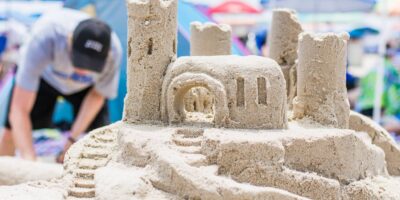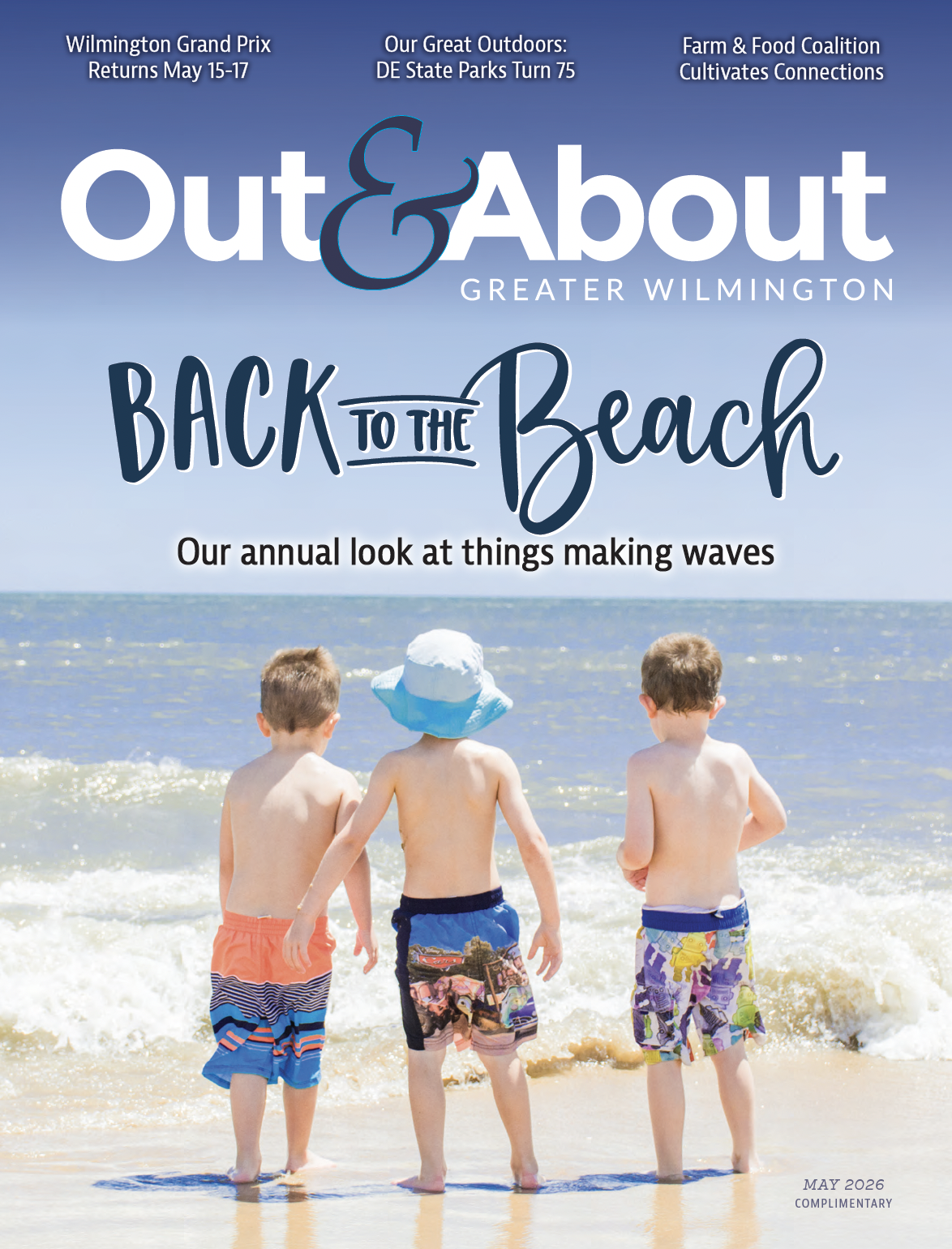


Above: Cape Henlopen’s scenic waters make it a standout spot for paddle-boarding.
By Andrea Smith
Photos courtesy of DNREC Division of Parks and Recreation
For a small state, Delaware is vast with natural beauty. Consider how the sunny shore and gentle waves at Cape Henlopen State Park welcome warmer weather in May, or the way the rolling hills of Brandywine State Creek Park are dotted with the hues of fall in October — and that’s just a taste of what Delaware state parks offer.
The Delaware State Parks agency started 75 years ago with just three parks. Today, it includes 17 state parks, 22 nature preserves, the Brandywine Zoo in Wilmington, and the Indian River Marina in Rehoboth Beach — more than 27,000 acres in the First State. These properties drive 11% of recreational spending in the state, and with about 60% of annual passes and surf fishing permits belonging to non-residents, a significant amount comes from out-of-state spenders.
“We help drive tourism for the state of Delaware, which benefits all residents of Delaware from a tax perspective [and in] a number of different ways,” says Alex Hannah, chief of marketing and creative services for the parks.



Since 2015, Delaware has twice earned a National Gold Medal Award for “excellence in long-range planning, resource management, and innovative approaches to delivering superb park and recreation services with fiscally sound business practices,” according to the National Recreation and Park Association website.

DNREC’s Greg Abbott says every resident should be proud of Delaware’s nationally-recognized parks system.
“There’s only one other state park system in the country that’s received that award more than once, and that was Florida,” says Greg Abbott, the parks’ manager of administrative services. “Think about the impact that we have every day in our state parks system. We’re really proud of that as employees of the state, and I think every resident should be proud that we’ve got that kind of state park system.”
Those who’ve been inside a state park are familiar with the pay stations or the need to purchase an annual pass for easy access. Fees like these and other sources of self-funding account for 65% of the Delaware State Parks’ budget, while the rest comes from tax revenue. The parks are included in the state government’s Division of Parks and Recreation, which is part of Delaware’s Department of Natural Resources and Environmental Control.
Effective at the beginning of 2026, the parks increased fees for the first time in 10 years, with annual passes for Delaware vehicles up from $35 to $50 and out-of-state vehicles up from $70 to $100. “Looking back in the last 10 years, our visitation increased by 2 million visitors, and our staffing is the same level,” Abbott notes. Demand on the parks to serve Delawareans and out-of-state tourists has especially grown since 2020, when the outdoors became the prime locale for socially distanced activities, and park officials expect at least 8 million visitors this year.
At $50 per annual pass, a Delawarean who visits a beach park five times will break even on the otherwise $10 entrance fee per vehicle. Abbott summarizes the benefits this way: “An annual pass gives you unlimited access to your state parks, and so instead of paying that daily entrance fee each time you come, you can breeze up to the fee booth and go right through with your annual pass. It allows you that access, but it also allows you access to, you know, if you enjoy playing tennis, we’ve got tennis courts. If you enjoy hiking, we’ve got hiking trails. If you go to the beach, we’ve got guarded ocean beaches.”
Abbott emphasizes that the goal isn’t just to break even each year and stick to the status quo, and with the 75th anniversary comes unique opportunities to engage with the parks.
It’s a Family Affair
The Manbeck family in Wilmington have been annual passholders for at least 10 years. When house hunting, the walkability to Bellevue State Park swayed them toward their current home.
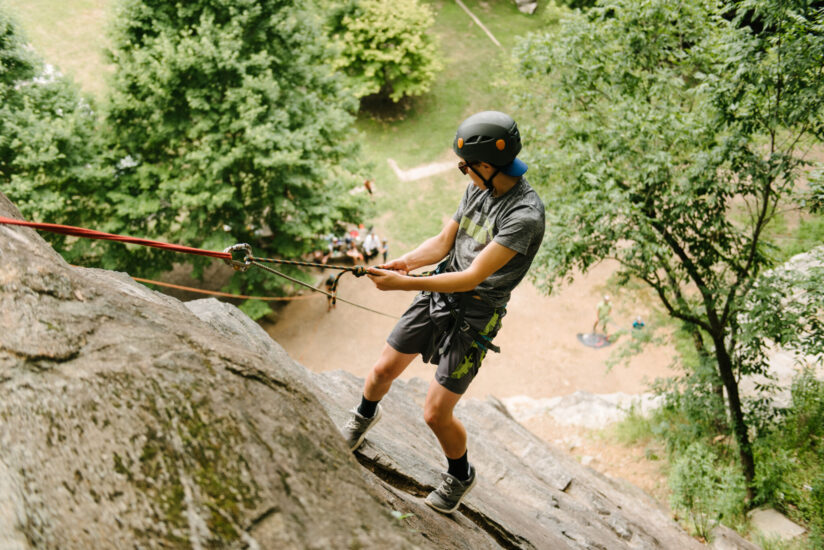
Alapocas Run offers opportunities for rock climbing and rappelling.
“We love being outside, and the diversity of events and things we can do at Bellevue is really amazing,” says Deanna Manbeck, mom to three energetic young boys. “It’s not just walking trails. We can visit horses. There’s fishing, the bike path, and playgrounds. Especially during the pandemic, it really was a place that we could go and explore and feel safe.”
On any given day, the Manbeck boys might be at Bellevue racing their bikes, climbing the rock wall, or casting lines into the pond — whatever releases pent-up energy. It’s a spacious area with convenient parking lots and bathrooms that are not porta-potties, which matters to parents of young children who seek easy outings.
On summer nights to come, the park will transform to welcome larger crowds for the 39th Summer Concert Series. The lawn at the Bellevue Bandshell will fill up with blankets and chairs, food trucks, dogs sniffing through the crowd, and lively chatter between new and old friends. Nearly 30,000 people attended a concert last season at one of the seven host parks.
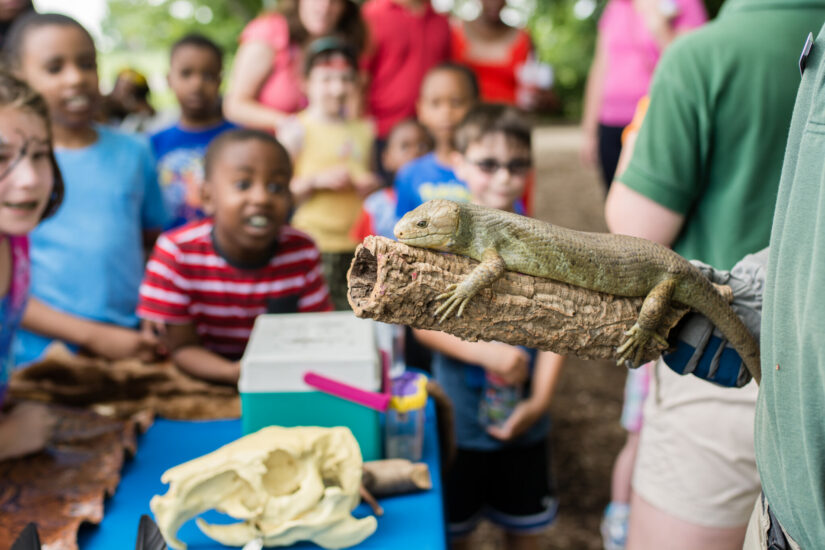
Brandywine Zoo provides numerous learning experiences and events for all ages.
The price of admission is simply the park entrance fee, which an annual pass covers. In past years, the line of cars without annual passes has created congestion and entry wait times, but Abbott is hopeful that new QR codes will help speed up the payment process.
The Summer Concert Series is supported by nonprofit Friends groups that support individual parks, as well as an endowment fund created by Dogfish Head Brewery in 2015 through the Delaware Community Foundation.
“[When] anybody contributes to that summer concert series [endowment], Bellevue State Park staff are receiving money to help bring in bigger performers, or different performers, and a diversity of performers,” Abbott says.
The Delaware State Parks calendar remains busy year-round with programs that incorporate artists, support the environment, preserve history, and further education and literacy efforts. This year, there are special programs and celebrations to honor the 75th anniversary, like a ceremonial planting of the parks’ 75,000th tree and a coordinated shoreline cleanup.
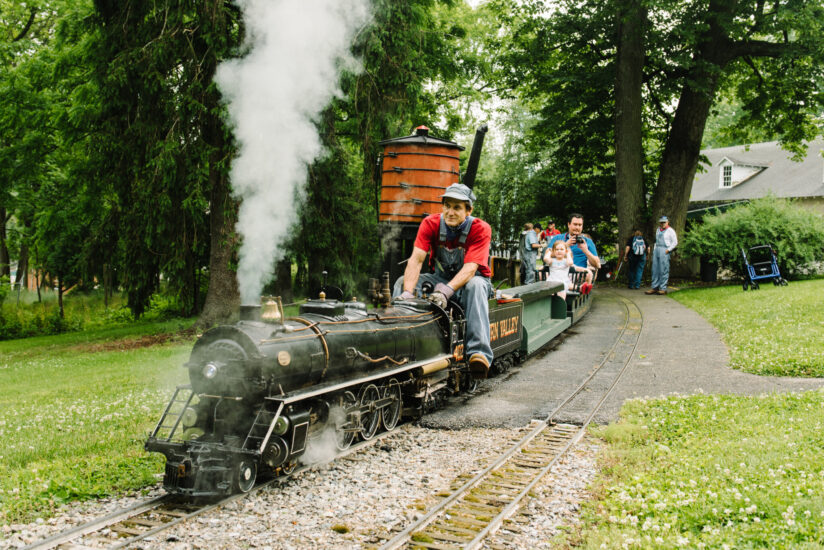
Visitors enjoy the miniature railroad at Marshall Steam Museum in Auburn Valley.
While kids are out of school, it’s the ideal time for exploring the parks through summer camps. Registration is open until each camp starts or slots are filled, and need-based scholarships help provide equal access to youth across the state.
The Can-Do Playground in Alapocas Run State Park is another family-favorite space. As the first Boundless Playground in Delaware, its design prioritizes a sensory-friendly experience and approachable equipment for kids of different abilities and ages.
Park entry fees and passes come with accessibility features such as Action Trackchairs, or motorized wheelchairs designed to traverse paved and dirt trails at select parks, and new hayride wagons that accommodate wheelchairs. Additionally, financial accessibility offers include $10 annual passes for those receiving assistance from a state service center, discounts to military members and seniors, and limited no-cost passes for library cardholders.
Show Me the Money
Endowment funds managed by the Delaware Community Foundation are the key to not only surviving but thriving long-term. Like a business, the parks go through slow seasons and weather events that result in less revenue, meanwhile operating costs are climbing.
“Any interest that is generated off [endowments] can be used for funding special projects and special programs, or operation maintenance and programs of all those parks when we don’t necessarily have the funding at certain times,” Abbott explains.

Bellevue hosts its free Summer Concert Series Thursday and Sunday evenings.
These funds allow for improvements even when operating budgets are tight. “You really need both,” says Stuart Comstock-Gay, president and CEO of the DCF. “If you only had an endowment and nothing else, that would be challenging. If you only have [an operations budget], you can keep going, but your future is not as secure.”
The Delaware Community Foundation is celebrating 40 years as a nonprofit that manages charitable funds, advises donors, grants funds to nonprofits and provides community leadership with the intention of strengthening communities, businesses and governmental entities across the state. Its partnership with the parks has resulted in 28 separate funds, and its $75 for 75 fundraising campaign has already raised $32,000 in anniversary-related donations.
“The everyday donors should know that if they contribute to a fund here, that money will be true to the intent of the fund,” Comstock-Gay says. “If it’s a fund for a particular state park, we are obligated to keep that money committed to that state park forever.”
Bellevue State Park might be the Manbeck family’s most-frequented park, but calling it their favorite is hardly fair. Deanna Manbeck’s husband Joe proposed to her at Killens Pond; they’ve taught their boys to ride bikes at Fox Point; Cape Henlopen has become their beach of choice; and their family outing to Fort Delaware proved especially memorable. It’s on their bucket list to eventually visit all 17 parks.
As for the cost of an annual pass, Manbeck says “the value of what you get access to is worth it to us.”
— Find your next adventure at DEStateParks.com