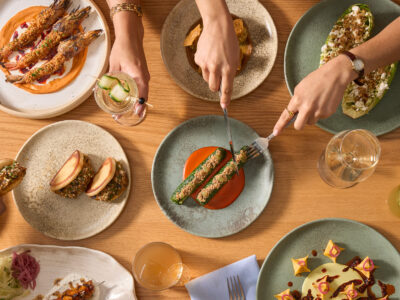

Above: Cooking with gas is convenient, but charcoal grilling provides creative options.
By Pam George
Given the record-breaking temperatures this summer, it’s not surprising the outdoor grill has become a home chef’s best friend. It keeps the heat outside and adds smoky flavor to food.
But grilling can be unforgiving. A few extra minutes can make a chicken breast taste like dust. Fish can stick to the grate or fall through it. Sugary barbecue sauce can go from glossy to scorched.
Here are some tips from industry experts.


Get to Know Your Grill
There is no universal winner in the gas-versus-charcoal debate. Joseph Tis, the executive chef and culinary director for Harry’s Hospitality Group, uses both, but for different purposes. He likes charcoal for slower cooking, such as a whole chicken. Gas wins on convenience.
“Gas is great when you need a quick meal on the table in the middle of the week and simply don’t have time to build a fire and wait,” Tis says.
Charcoal requires more planning, but it offers opportunities to adjust the coals and airflow and add wood for more flavor.
One of the easiest ways to gain control over any grill is to stop treating the entire grate as one cooking surface, says Antimo DiMeo, executive chef and partner with Bardea Restaurant Group, which owns Bardea Steak. “Create a hot side for searing and a cooler side for finishing,” he suggests. “Two-zone cooking gives you far more control and almost always produces juicier, more evenly cooked food.”
You can sear a steak or chicken over direct heat and then move it to the cooler side to finish without burning the exterior. It also gives you somewhere to move food when flare-ups occur.
Know Your Beef
Although steak is one of the most popular grilling meats, not every cut is at its best after a visit to the grill. For instance, because filet mignon is so lean and flat, it shines after contact with a hot pan, which helps it develop a good crust, explains Max Kaklins, executive chef at La Fête.

“Good marbling equals flavor,” says Antimo DiMeo, executive chef/owner at Bardea Group. Photo courtesy Bardea Restaurant Group.
Cuts with more fat, particularly ribeye, benefit more from the grill, he says. Indeed, marbling is “king,” Tis says. The ivory streaks of intramuscular fat melt during cooking, contributing flavor and moisture.
Along with marbling, DiMeo looks for thickness and quality. “Good marbling equals flavor. A steak at least 1½ inches thick is much easier to cook evenly, and buying the best quality beef your budget allows will always make a difference,” he says.
Tis recommends getting to know the person behind the meat counter. “They’ll let you know where the product is coming from and more than likely tell you what the best item in the case is,” he says. “After all, who knows better than the person cutting it?”
For a thinner, faster-cooking option, Jordan Carfagno, executive chef for Food Away From Home at McCormick & Company, favors skirt steak. Its loose grain readily absorbs a marinade, and the thin cut cooks quickly over high heat. Because it cooks so fast, however, it requires close attention.
Give Chicken Some TLC
Chicken thighs, drumsticks and whole legs are forgiving choices for the grill because dark meat contains more fat than breast meat. Kaklins particularly likes bone-in, skin-on chicken legs cooked over a smoky grill at a moderate temperature. “They retain all that moisture,” he says. “They’re smoky. They’re flavorful. They pick up a char well.”
Keeping the bone and skin intact gives the chicken additional protection from the heat and allows it to stay on the grill longer.
Boneless, skinless breasts require greater care. Salt them and let them sit for at least an hour or brine them overnight to help them retain the moisture, Kaklins says. Then pay close attention to temperature and avoid overcooking.
Save sugary barbecue sauce for the end. Sugar burns quickly over high heat. Cook the chicken nearly through before applying the sauce so it has just enough time to glaze and caramelize.
Pick a Fish That Can Take the Heat

Firm fish are best for grilling, says David Leo Banks, executive chef and owner at Banks’ Seafood. Photo courtesy Bank’s’ Seafood.
Firm fish are the easiest candidates for grilling, says David Leo Banks, executive chef and owner of Banks’ Seafood Kitchen & Raw Bar on the Wilmington Riverfront. He recommends tuna, swordfish and halibut. Salmon also performs well, particularly with the skin intact. DiMeo likes to grill branzino.
Flaky fish, such as cod and flounder, are more challenging because the flesh can break apart. Put delicate fillets in foil or use a grill basket. Banks says another restaurant technique is to briefly grill the fish on both sides to give it grill marks, then place it in a pan and finish it in the oven.
Practice Patience
According to DiMeo, too many people flip and move food around the grill too frequently. Fish requires a deft touch. Put the skin side down first and wait, Banks says. If the fish resists when you try to flip it, it’s not ready, he notes. Once it’s properly seared, it should release more easily.
Kaklins, who likes to grill whole fish, squid and shrimp, offers another piece of seafood advice. “A lot of home cooks overcook seafood,” he says. He suggests pulling seafood off the grill on the earlier side. You can always put it back over the flame.
Season For Success
What happens before food hits the grate can be just as important as what happens once it gets there. Using a marinade or rub may depend on the protein, cut and quality.
“For larger cuts like steaks, I prefer seasoning the night before,” DiMeo says. “The salt has time to penetrate the meat, improving flavor and helping it retain moisture during cooking. If you don’t have that much time, season at least 30-60 minutes before grilling rather than right before it hits the grate.”
Leaner cuts will benefit from a marinade that adds flavor. Kaklins recommends incorporating fat, acid, salt and spices. The fat adds flavor and helps reduce sticking, while acid provides brightness.
There is, however, such a thing as too much acid — or too much marinating time. Citrus juice and vinegar can alter the texture of seafood if it sits too long, he says. Pineapple and Asian pear contain enzymes that can also break down proteins.
“If you want to make a nice acidic, bright marinade, just be mindful that maybe you don’t let your stuff sit in it for 24 hours,” Kaklins says. “Maybe it’s 40 minutes before you cook it.”
A dry rub is another option. Typically, a rub is a mixture of salt, herbs and spices — and sometimes sugar — worked onto the food before grilling. Carfagno suggests pairing the seasoning with the protein. For instance, choose robust spices for beef, garlic and herbs for chicken and smoky or slightly sweet profiles for pork.
For cooks who don’t want to mix their own, McCormick’s Grill Mates line includes blends designed specifically for grilling, such as Signature Blend Seasoning, made with sea salt, garlic, black pepper and celery seed.
Think Outside the Box
Protein isn’t the only food that benefits from the grill. Vegetables may be supporting players at many cookouts, but live fire can turn them into a highlight. DiMeo recommends cabbage, carrots, onions, asparagus, zucchini, peppers and corn. Use large pieces so they don’t fall through the grate, coat them lightly with oil and season simply. Finish with fresh herbs, citrus or flavored butter.
Tis cuts broccoli in half, lightly oils it, seasons it with salt and grills until it develops some char. “The light char transforms the flavor profile and is delicious when you add fresh lemon and parmesan after it comes off the grill,” he says.

Many area chefs say preparing the meat before grilling — even the night before — is as important as the grilling itself. Photo by Rebecca Lennon.
Banks is partial to eggplant, zucchini, yellow squash and tomatoes. Halved plum tomatoes can be grilled cut-side down until they pick up color and flavor.
Meanwhile, pineapple is a natural candidate because its firm texture stands up to the heat and its sugars caramelize beautifully. Peaches, nectarines and plums are also good choices.
Use slightly underripe fruit, Tis says. It’s less likely to become mushy or fall apart while grilling. The grill will bring out the fruit’s natural sweetness.
Banks is another fan of grilled pineapple, particularly with a contrasting seasoning. Even grapes can go on the grill briefly — just long enough to blister and acquire a bit of char.
Grill Lighter
Grilling can deliver enough flavor that food doesn’t necessarily require a heavy sauce. If you’re watching your weight, pay particular attention to sauces and processed meats.
“It’s best to stick to lean proteins like chicken, pork tenderloin and seafood,” says Sherry Rujikarn, WeightWatchers coach and head of recipe innovation.
For a healthy swap, pick pork tenderloin instead of pork shoulder or trimmed strip steak instead of ribeye. A burger made with 95% lean ground beef instead of 80% is a small change that can make a big difference, Rujikarn says.
“The grill imparts so much flavor on its own, you don’t need a lot of high-point sauces or ingredients to make them delicious,” Rujikarn says.
Calories can also add up quickly in sausages, hot dogs, heavy sauces and mayonnaise-based potato and macaroni salads. Her strategy is to fill up first on lean proteins, grilled vegetables and salad. Decide whether you still want the heavier picnic sides when you go back for seconds.
Let It Rest
Don’t slice into a steak the second it leaves the grill. “Resting is just as important as cooking,” DiMeo says. “As meat cooks, the juices move toward the center. Giving it 5-10 minutes to rest allows those juices to redistribute throughout the meat instead of running onto the cutting board, resulting in a juicier, more tender bite.”
Use those few minutes to finish the vegetables, pour the drinks and call everyone to the table for the feast.