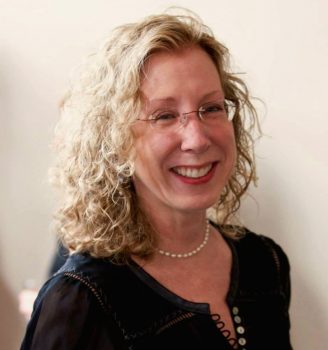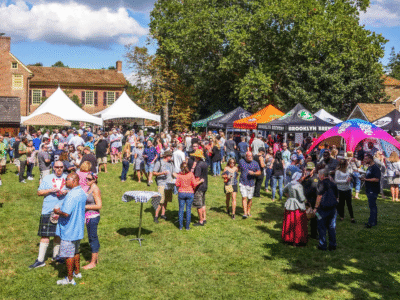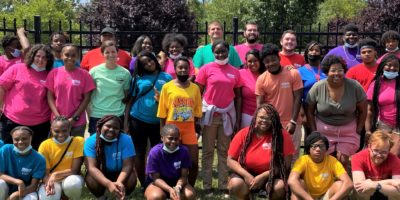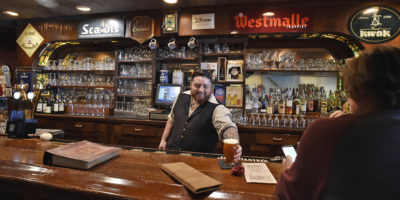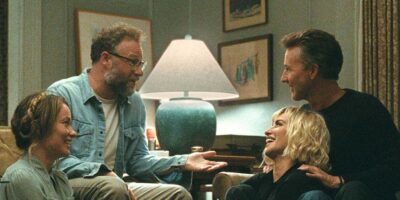

Above: Jackie Feinbaum, an occupational therapist at Nemours, serves up a cold one during the non-profit’s fundraiser at BBC Tavern and Grill.
By Pam George
Photos by Ben Fournier
Shortly after opening BBC Tavern and Grill in 2010, David Dietz decided to raise money to help children and families affected by juvenile diabetes. The oldest of his three daughters was 5 when she was diagnosed with the disease, which affects the pancreas. Dietz had been involved with the Juvenile Diabetes Foundation, now known as Breakthrough T1D, and was aware that the staff worked long hours.
“I thought, ‘How can I help them?’” he recalls.
Six friends agreed to guest bartend at his Greenville restaurant and invite their friends. “We raised like $1,500, and the foundation got a check out of nowhere,” Dietz says. One of the participants was a volunteer with the American Cancer Society, which benefited from the event that followed.
Today, BBC Tavern hosts guest bartending nights on Mondays, Tuesdays, Wednesdays, and occasionally Thursdays. “I think we did 14 in October,” Dietz says.
The causes run the gamut, from the arts — Serafin Ensemble on Dec. 9 — to education — Conrad School of Science on Dec. 10. The calendar is booked into April 2026.

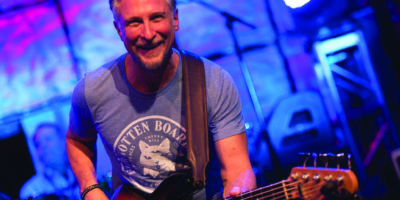
Dory Carberry brought some positive energy to Team Cure Cholangio’s night.
While many restaurants do dine-and-donate or guest bartending events, none can compare to BBC Tavern. That’s because Dietz does more than allow volunteers behind the bar. He created the Guest Bartender Program app, a how-to manual and marketing tool on an easy-to-use platform. It also serves as a vehicle for online donations.
“That’s where the money really takes off,” he says. “It’s more valuable than 50-50s, raffles and silent auctions.”
Repeat organizer Kerry Welsh has raised about $10,000 per event for Rodney Street Tennis and Tutoring.
“The whole process makes it very easy for folks to coordinate the events and for bartenders to raise money,” she says. It is also an awareness tool, she adds.
While the program benefits charities, it’s also good for Dietz’s business.
Never One to Miss an Opportunity
Creating a fundraising app may seem like a stretch for someone in the hospitality business, but Dietz is passionate about processes. He focuses first on the facility and the personnel.
“It’s the people who make the business, and you have to make sure everything is working, from the credit card system to the HVAC,” he explains.
Secondly, he’s into advertising and marketing. Once the place is clean, the servers are trained, and the chef is in the kitchen, you need people in the seats.
Those who know Dietz aren’t surprised by his ability to take an idea and run with it. He was still in his 20s when he bought a Boston Chicken franchise, and he was among the first Delawareans to open a brewpub in the mid-1990s. Brandywine Brewing Company (BBC) was in what is now Pizza By Elizabeths. It closed in 2004 with the promise of a new location.
Sure, Dietz has had some misses, namely a second Brandywine Brewing Company, which opened in 2000 and closed six months later, and Shaggy’s on Main, which Dietz owned with Joe Van Horn. Customers came to Shaggy’s for drinks, not food, which didn’t fly with the city of Newark. At the time, no new bars were allowed.
The seasoned restaurateur realized that the pot of gold was in his own backyard: Greenville. His Bar Reverie has an urbane, more upscale approach, while BBC Tavern — a play on the brewpub’s nickname — is more pub-like; nachos are a big seller. BBC Tavern is the perfect gathering spot for a guest bartender event.
A Blueprint for Fundraising Success
After those initial events in 2010 and 2011, organizers began asking Dietz for tips. He scribbled how-to bullet points on the back of a napkin for one friend, and when the requests for advice kept coming, he wrote a copyrighted manual — complete with timelines and checklists.
“I call it a four-week fundraising program capped off by a cocktail party,” Dietz says. The pandemic in 2020 gave him time to refine an online app, which he updated at least three times.
Dashboard categories include fundraising and promotion. There are also areas for participants, information about the cause, images and event details.
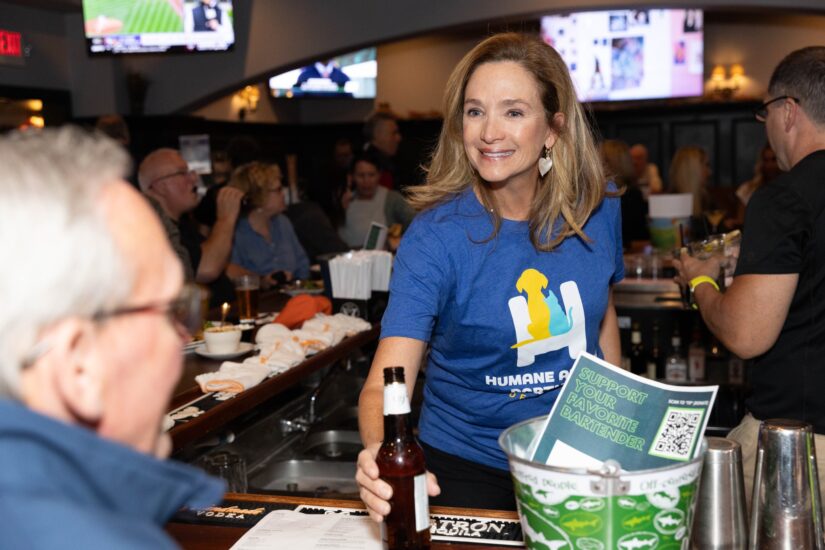
Dianna Long helps raise funds for Humane Animal Partners.
“The platform makes it very easy to add and edit bartenders and to automate emails to them about their fundraising progress,” says Welsh.
Dietz, who supplies bartender recruitment copy, recommends having at least 18 bartenders, since some will raise the bulk of the funds, some will do well with encouragement, and some will drop the promotional ball. (He recommends they work two at a time in 20-minute intervals.)
He tells organizers to look for seven key personality traits during recruitment, including competitiveness. To foster a friendly rivalry, he recommends team contests focused on raising money or securing positive responses to Facebook event invites.
“We create a sense of obligation to the tribe — it’s a psychological thing,” Dietz says. A leaderboard on the site displays the bartenders’ total online donations.
He also provides suggested text for fundraising and promotion. Since guest bartenders post to their personal profiles, the algorithm boosts the event to the top of followers’ newsfeeds.
Harnessing the Power of Online Giving
The online donation page is a valuable function. Since 2019, people have donated more than $500,000 online. Stacey Silvers donated to support a friend who was bartending and found it easy to do. When combined with on-site initiatives — and bartending tips — it adds up to a substantial amount of money rooted in a social night out.
Dietz leaves the donation portal open for about 10 days after the event. He then factors in the varying credit card fees, many of which donors elect to cover. He deducts the program costs and other expenses, such as graphic design and photography.
He cuts the charity a check representing 10 percent of the dinner sales and another for the donations. It is not a contribution from BBC Tavern, he stresses. Donors receive letters for their tax records.
The app’s transparent financial report section details the distribution. For instance, one charity received $23,250 in online donations and $5,000 in offline donations. The platform cost was $1,509. (With on-site raffles and other ancillary activities, the total proceeds were closer to $40,000.)
The ability to donate online has not affected attendance, he says. It’s all about the personal connection between the friends of the guest bartender.
Win-Win
Even before the app’s creation, the program benefited the restaurant. “BBC is packed, which means that instead of buying three cases of tomatoes a week, I’m buying eight, so the tomatoes are fresher — that’s true down the line with seafood, poultry and meat,” Dietz says. “It’s a lot easier to run a busy restaurant with fresh food than a slow restaurant buying food once a week.”
Dietz has already had establishments in Florida, Pennsylvania, and North Carolina license the program. He’d love to see a chain such as Applebee’s collaborate with a national brand, such as Miller beer, to raise money for a charity.
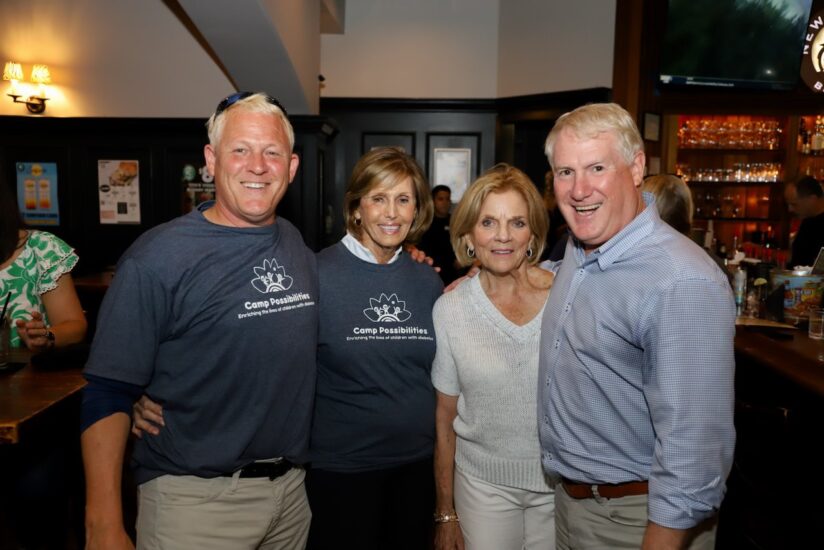
At right, BBC owner Dave Dietz with (l-r) his brother Stephen, mother (Janet) and Sally Dent during event for GBE for Camp Possibilities that raised $65,000.
“If there are 1,000 locations, and each one gets an extra 150 to 200 people to come into their restaurant, think how much money can be generated for the charity. We collect donor information so that you can send them a coupon. The data you can collect from this is insane,” he says.
He currently has sponsors who pay to have their logos on relevant materials. “You have 18 guest bartenders with an average of 1,000 friends, who have significant others all promoting it on Instagram, TikTok, Facebook and LinkedIn. They’re emailing their friend groups, and when the friends are asked to donate, they all see those logos.”
However, he’s thinking beyond a fundraiser focused on beverages. “It could be the guest sub or sandwich-maker promotion led by a band leader in elementary school and middle school,” he says. “They pick a Saturday and Miss Smith, the principal, is back there making subs.” Don’t want a hoagie? You can donate online.
The Guest Bartender Program proves that a neighborhood restaurant can be the catalyst for something far larger than a night out. What began with six friends and a $1,500 check has grown into a finely tuned fundraising engine that empowers charities, energizes volunteers and strengthens Dietz’s own business. As BBC Tavern heads toward its second decade, the program continues to demonstrate that generosity — when given structure, momentum and a little friendly competition — can ripple far beyond the bar.
— For more info, visit GuestBartender.org. For a list of upcoming events, visit BBCTavernandGrill.com/GuestBartending