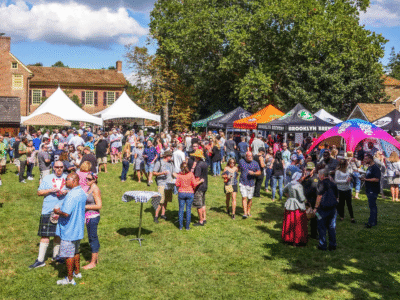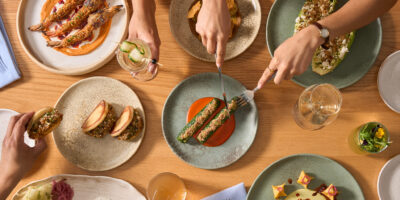

Above: The opportunity to sample Mediterranean cuisine that extends far beyond Italy has increased dramatically in recent years. Photo by Dan Heinkel.
By Pam George
Bardea Restaurant Group built its reputation on Italian-inspired cooking, but the Wilmington restaurant group has never been a one-note operation. Witness Bardea Steak, Roost Pub & Kitchen and the quick-casual Taqueria El Chingón in DE.CO Food Hall.
With the newly opened Ezme, chef Antimo DiMeo and his team have turned to Turkey, Greece and the Aegean Coast for inspiration. Consider beef tartare with a truffle-shallot confit, pomegranate verjus with smoked labneh, a strained yogurt, and chicken kebab with apricot, haydari (a Turkish yogurt dip), za’atar-spiced butter and English cucumber.
The dishes are examples of Mediterranean fare that ventures well beyond Italy. Along with Turkey and Greece, the Mediterranean also touches Lebanon, Syria, Israel and the Palestinian territories. Morocco is also on the Mediterranean.

These countries’ cuisine shares some similarities. Credit the Ottoman Empire, which ruled large swaths of southeast Europe, West Asia and North Africa for centuries. “The empire was so vast,” says John Tekmen of Semra’s Mediterranean Grill in Rehoboth Beach. “Governors and representatives would take their chefs with them.”
As the dishes traveled, local cooks added regional ingredients and spices, which is why you’ll find baklava, hummus, kebabs and falafels in many countries.
DiMeo, however, does not want to deliver a geography lesson to his guests. “Our job is to introduce those differences through flavor and let the food do the teaching,” DiMeo says.
Fortunately, there are tasty classrooms throughout Delaware.
From Gyros to Hummus
Greek cuisine is perhaps the most well-known non-Italian Mediterranean cuisine in Delaware, and not just because of the Holy Trinity Greek Festival. During the 20th century, Greek immigrants who didn’t speak English found jobs in restaurant kitchens, where physical labor had more value than language skills. Over time, these workers opened their own sub and pizza shops, diners, and luncheonettes, all of which were affordable gateways to entrepreneurship.
To start, these businesses offered American fare, including the standard breakfast or pizzas. For instance, Lazaros “Louie” Gouvas came to Rehoboth Beach from northern Greece to work for his uncle George at George’s Lunch on Rehoboth Avenue. Eighteen years later, he opened Louie’s Pizza in 1974.
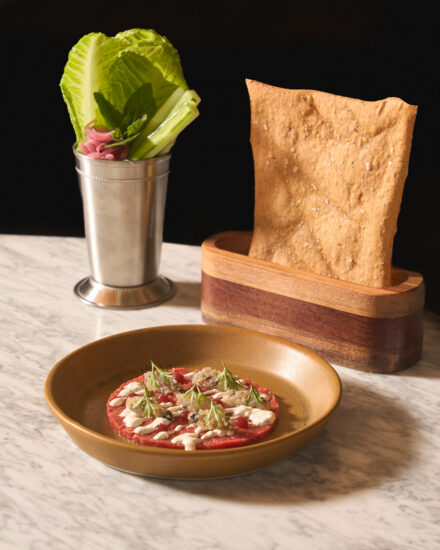
Beef tartare at Ezme, which recently opened in Wilmington. Photo by Dan Heinkel.
Gyros and Greek salads crept onto many sub shop and diner menus. John and Elena Alexopoulos opened Cosmos Restaurant on Maryland Avenue in Wilmington in 1981. Most of the menu is typical diner fare, but there is a category for Greek dishes, including pastitsio, moussaka and souvlaki.
In 1975, Mohammad “Richie” and Marcia Shihadeh, opened the Camel’s Hump in Rehoboth to focus on cuisine with a Lebanese flair. At the time, falafels, hummus, baba ghanouj, and lamb kabobs were foreign to most diners. However, tourists embraced the concept. The restaurant lasted 30 years, closing in 2005, shortly before Marcia’s death.
Later, Casablanca Moroccan Restaurant in New Castle, Ali Baba Middle Eastern Cuisine in Newark and Semra’s Mediterranean Grill in Rehoboth Beach gave Delaware diners Moroccan, Lebanese, Turkish and other eastern Mediterranean fare.
Meanwhile, Mediterranean cuisine crept onto mainstream menus. Today, hummus and pita are an appetizer option at Columbus Inn in Wilmington. A Greek salad is listed with the Caesar salad on the menu at Culinaria in Brandywine Hundred, and Hayworth & Finch, a Trolley Square sandwich shop, makes a falafel with green peas.
Chefs in upscale restaurants are creating dishes with harissa, a chili paste or sauce, and za’atar, a spice blend, the latest form of fusion.
The Next Wave
Consumers’ comfort level with non-Italian Mediterranean cuisine increased as fast-casual chains Cava and The Simple Greek arrived in Delaware. Meanwhile, local fast-casual operations opened, including Opa! Opa! in Trolley Square, a Greek takeout restaurant that opened in 2015.
At the beach, Kabab Falafel Addiction opened in 2022 in the Shoppes of Camelot near Rehoboth Beach. Owner Rafat Mardawi uses organic olive oil from 100-year-old trees in the mountains of Nablus, Ramallah and Jerusalem. His spices come from Jordan.
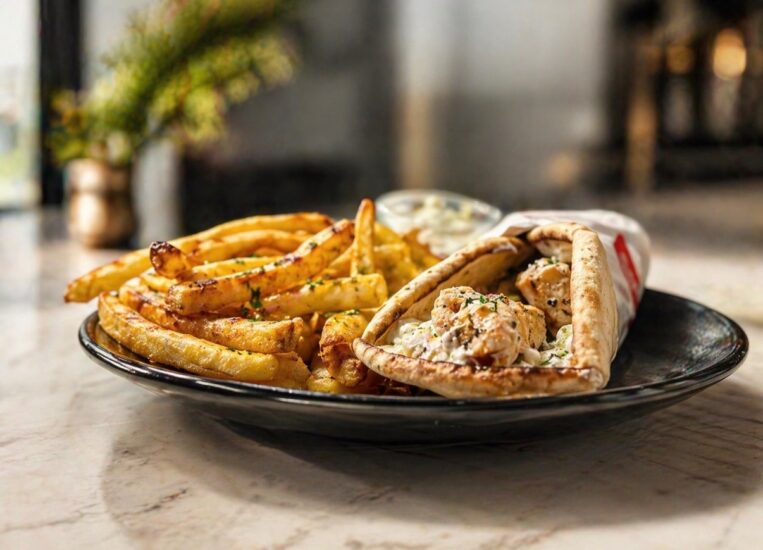
Cafeneo gives Newark diners an option for Greek cuisine made from scratch.
In 2023, Cafeneo opened on South Main Street in Newark. The restaurant is owned by Antonios Fessaras, whose father Zaharias Fessaras, once owned Daffy Deli. The younger Fessaras spotted a niche.
“If you wanted Greek baked goods, you either were driving down to Baltimore or almost to New York to find anything remotely Greek,” he says. The shop uses hisgrandmother’s recipes for most of its Greek sweets, and about 97 percent of the items are made on site from scratch.
The restaurant serves breakfast sandwiches on croissant. But you can also buy kataifi, made with fine strands of pastry around a nut filling, and portokalopita, a cakey pastry accented with crumbled phyllo, Greek yogurt and orange zest.
Fessaras’ menu has detailed descriptions of the Greek items. “We find people may read over it a few times just to kind of understand what exactly it is, and more often than not, they end up getting it if they’ve never had it before,” he says. “There’s been an uptick in Mediterranean cuisine inquiries.”
After securing a liquor license in February, he’s added savory dishes, including the familiar moussaka. The restaurant has servers on weekend evenings. Customers order at the counter during the day.
Greek coffee, meanwhile, brews on very hot sand. Espresso-based drinks are also available. In fact, the restaurant’s name is a nod to the Greek kafenio, a coffeehouse that functions as a neighborhood gathering place. Fessaras’ grandfather had a coffee shop in Greece.
Spanning The State
That said, there’s room for full service. Owner Murat “Mike” Tan, who is from Turkey, opened Aroma in Rehoboth Beach in March 2020, just as COVID restrictions shut down dining rooms. The timing was brutal, but the concept endured. The menu includes mezes, quinoa tabbouleh, yogurt-and-carrot dip and chopped vegetables with walnuts and pomegranate molasses.
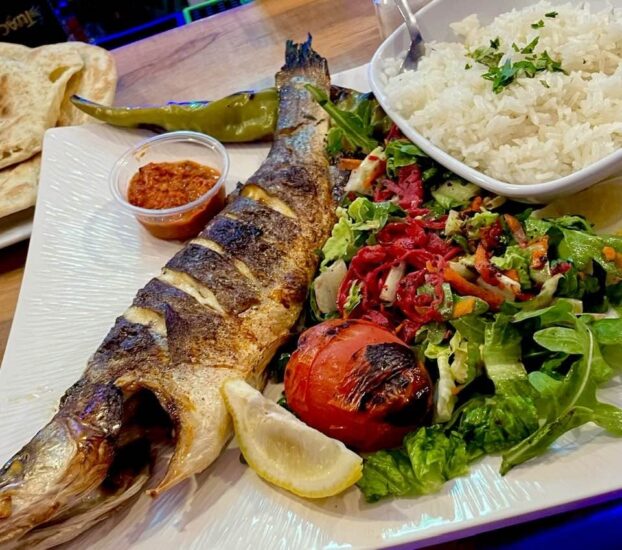
Whole bronzino from Aroma in Rehoboth Beach.
Aroma is a short walk from Semra’s Mediterranean Grill, which draws from Semra Tekmen’s family recipes. The Rehoboth Avenue restaurant has a to-go operation with a window facing the street. Unlike many sub shops, Semra’s does not use processed meat for its gyros. Employees season the meat, stack it on the spit and shave it off for sandwiches and entrees, John Tekmen says.
These two Rehoboth eateries have company. Sirocco Food & Drink in Rehoboth Beach in the Coast Rehoboth Beach concentrates on Greek and Italian cuisine. Signature dishes include saganaki, pan-fried kefalograviera cheese flambéed tableside, and charred octopus.
Turkiye Kebab House is in The Grove in Newark. It’s owned by Ugur “Noah” Dizman and partners Alayiddin Ozdemir and Ismail Aydin. The nearly 150-seat establishment has an extensive selection of dishes, including the familiar baba ghanoush, gyro, meat skewers, and baklava. (The mixed grill is enough for three, Dizman says.)
You’ll also find the unexpected — cow’s head soup, lamb shank over smoked eggplant, buttered Turkish flatbread topped with an egg and a sandwich with mashed tomatoes, peppers, onions, parsley, tomato paste and olive oil. Less adventurous diners can opt for a cheesesteak, salmon or Margherita pizza.
Next Level
Into this mix comes Pithari Mediterranean Cuisine in Middletown, which opened in late 2024 in the former La Banca space. The old bank building gives the restaurant a polished date-night setting, complete with a private dining room called The Vault of Stone.
Owner Dimitrios Tangalidis, who is from Greece, has been in the restaurant business for more than 30 years and owns Select Pizza and Grill restaurants in Middletown, Dover and Smyrna. A pithari is a Greek/Roman storage vessel, and the restaurant draws from Greek and broader Mediterranean traditions, with dishes such as Moroccan shrimp, chicken skewers, hummus, tzatziki, kebabs and seafood.
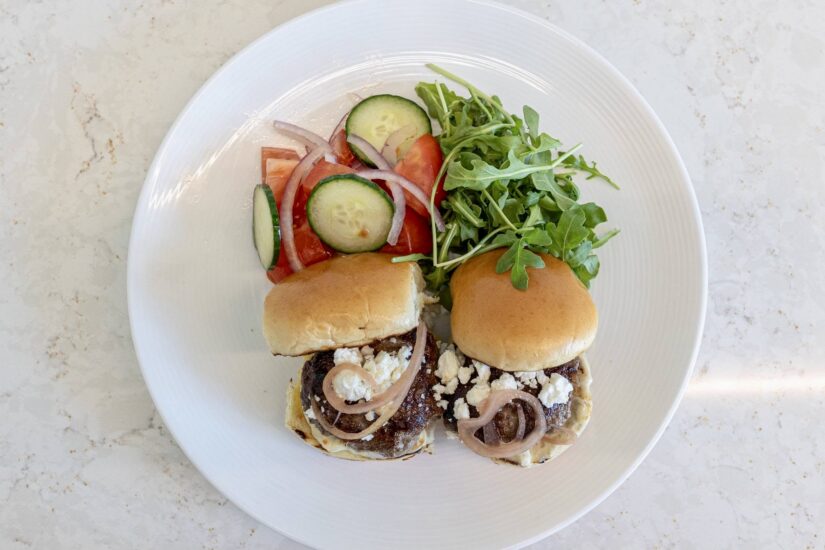
Lamb sliders from Sirocco in Rehoboth Beach.
Ezme brings the trend back to Wilmington with the Bardea Restaurant Group’s sense of style and DiMeo’s creative culinary talent. The restaurant is one of several Wilmington concepts from the group, which is led by DiMeo, his father, Pino, and Scott Stein.
At 50 seats, the dining room is smaller than Bardea Food & Drink and Bardea Steak. The restaurant is named after a simple Turkish salad that Antimo DiMeo had in Istanbul.
“It completely changed how I thought about food,” he recalls. “Nothing fancy, just tomatoes, peppers, herbs and olive oil but it was unforgettable. That’s the kind of food I love most.”
He hopes that diners will embrace “meze” or “mezze” culture. “We’ve tried to introduce the idea that the most memorable part of the meal might be a table full of small plates shared with friends and family,” he explains. “That’s really the heart of Mediterranean dining, and something we’ve always honored at our restaurants, especially Bardea Food & Drink.”
To date, the kebabs are a favorite. DiMeo wants more people to order the borek.
“Every culture has a version of a stuffed pastry, but borek is one of the great culinary treasures of the Eastern Mediterranean,” he says. “Ours is incredibly delicate, flaky and packed with flavor, and I think it perfectly represents what we’re trying to do at Ezme: Take something rooted in tradition and execute it at the highest level possible.”
Delaware’s Mediterranean moment is not just about adding hummus or feta to familiar menus. It includes an increased appetite for food rooted in traditions that stretch from Greece and Turkey to the Levant and North Africa.